Answer: The royal pleco (*Panaque nigrolineatus*) is a large wood-rasping loricariid, not a general algae cleaner. Adults can exceed 35 cm and need a large aquarium, constant bogwood, strong filtration, oxygen, and a high-fibre diet. Expect heavy sawdust-like faeces and slow but relentless growth.
Panaque nigrolineatus (royal pleco) is an aquarium catfish whose care is defined by adult size, feeding surface, and oxygen demand. The label "pleco" or "algae eater" is too crude; the difference between a small biofilm grazer and a half-metre wood-and-detritus machine is the difference between a successful aquarium and a welfare problem.
Part of the Complete Catfish Guide.
Identification
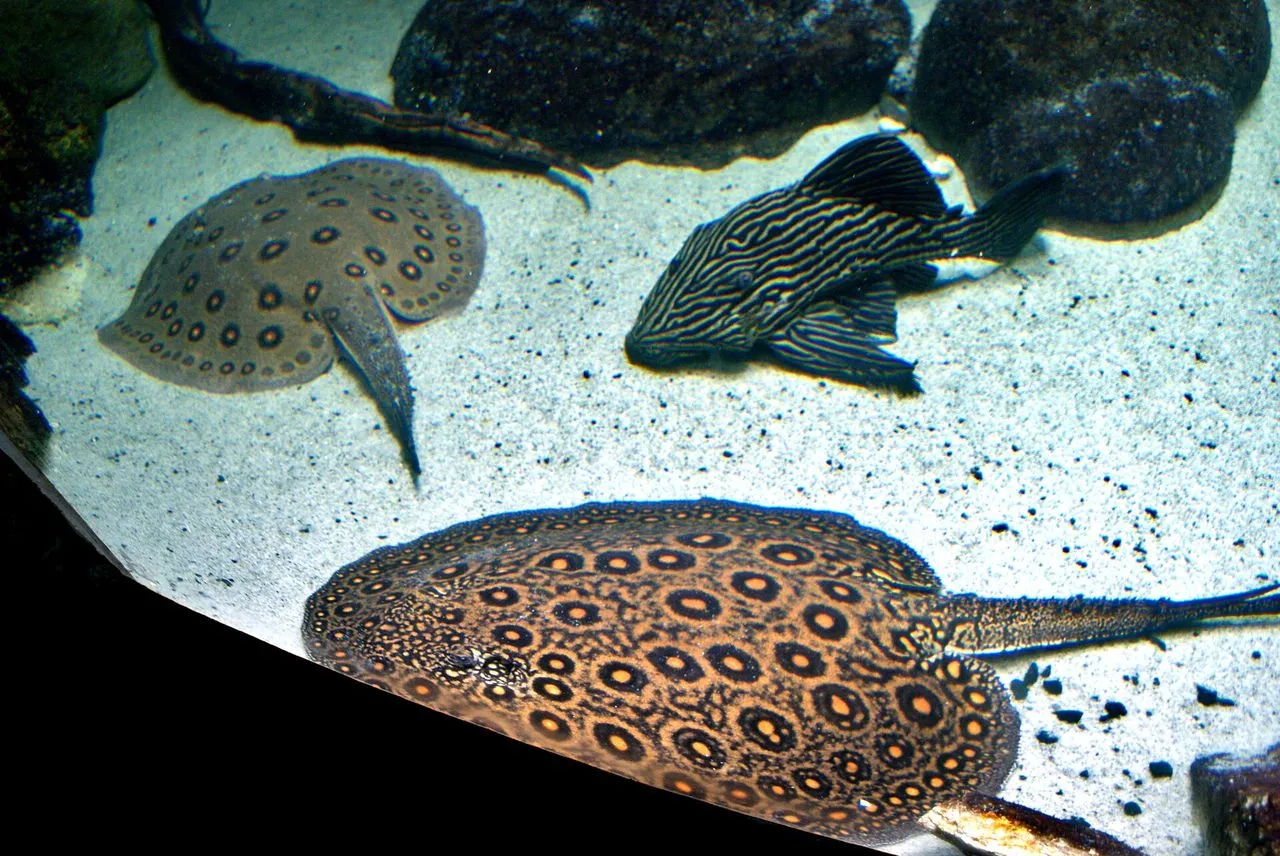
Royal plecos have a heavy head, red or orange eyes, striped body pattern, and spoon-shaped teeth adapted for rasping wood. Juveniles are attractive, but the head width and grazing output foreshadow adult scale.
| Requirement | Target |
|---|---|
| Adult size | 30–43 cm |
| Social plan | Keep singly or in a very large loricariid system. Adults defend feeding surfaces and shelters. |
| Temperature | 24–29 °C |
| GH / KH | GH 2–12 °dH; KH 0–6 °dH |
| pH / conductivity | pH 6.0–7.5; 80–350 µS/cm |
| Aquarium | 350 litres minimum for long-term care; more floor area is strongly preferred |
Identification should be made before purchase, not after the fish has outgrown the tank. Compare similar loricariids such as common pleco, clown pleco, and bristlenose pleco and reject vague labels such as "algae pleco" when adult size is not supplied.
Origin & Habitat
Panaque inhabit South American rivers with submerged timber, strong seasonal flows, and oxygen-rich water. Their gut microbiome helps process wood-associated material; the aquarium must supply real wood, not just a ceramic cave.
Wild habitat translates directly into aquarium engineering. A fish from warm floodplain wood tangles needs different current, food, and shelter from a fish from cool stony streams. Matching that ecology is more reliable than chasing a generic community-tank recipe.
Aquarium Husbandry
Use large bogwood pieces, high-capacity mechanical filtration, strong biological filtration, and open floor space. Wood particles and faeces are constant, so maintenance must be routine rather than occasional. Attach hardy plants such as java fern to wood if plants are desired.
Use 350 litres minimum for long-term care; more floor area is strongly preferred. Keep ammonia and nitrite at 0 mg/L and nitrate preferably below 20 mg/L. If the aquarium is new, mature it first; cycling a new aquarium explains why catfish added too early often decline even when other fish appear unaffected. If hardness must be adjusted, use the principles in water hardness explained rather than pH-down routines.
Substrate is less important for sucker-mouthed loricariids than for corydoras, but layout still matters. Caves must fit the fish, wood must not collapse, and food must be retrievable before it rots. The general trade-offs are covered in substrate selection.
Tankmates & Behaviour
Keep singly or in a very large loricariid system. Adults defend feeding surfaces and shelters.
Tankmates should be chosen by mouth size, temperament, and chemistry. Peaceful characins from the complete tetras guide often work in soft-water systems. For cichlid aquaria, consult the complete cichlids guide; a bottom position does not protect a catfish from territorial attacks.
Diet
Wood is mandatory, supplemented with vegetables, high-fibre wafers, and occasional protein. Too much animal protein causes digestive trouble. A healthy royal pleco produces long pale-brown fibrous faeces; that is normal, not evidence of poor food.
Do not confuse rasping with cleaning. A healthy grazing catfish turns plant, wood, algae, and prepared food into substantial waste. Filtration and water changes must match that conversion. For vegetable foods, offer small portions and remove leftovers before they sour.
Breeding
Home breeding is rare and not a realistic goal for most aquarists. The large adult size, territoriality, and probable cave or bank-spawning requirements make controlled reproduction difficult.
Where breeding is realistic, provide secure caves or surfaces, excellent oxygen, and stable water. Where it is unrealistic, do not use failed breeding as evidence of poor care; many large or imported loricariids have reproductive requirements not easily reproduced in home aquaria.
Common Problems
The two failures are small tanks and spotless aquascapes. This fish rearranges wood, produces debris, and needs grazing surfaces. It is magnificent only when the aquarium is designed for its ecology.
Quarantine new loricariids and observe faeces, belly shape, respiration, and grazing behaviour. A fish that clings motionless but loses body mass is not resting; it is declining.
Maintenance Rhythm
A royal pleco aquarium has a different maintenance rhythm from a tidy planted community. Wood dust, fibrous faeces, and loosened biofilm accumulate continuously. Mechanical media should be easy to rinse, because leaving it packed with wood fibre reduces flow and oxygen. This is not a fish for a filter that is opened only when flow collapses.
The aquascape should be built for access. Leave siphon routes behind wood, avoid unstable piles, and use wood pieces large enough that the pleco can rasp without rolling them. Healthy royal plecos work on the same surfaces night after night; polished grooves in wood are a sign that the aquarium is supporting natural behaviour.
Buying, Quarantine, and Observation
Select specimens with intact fins, clear eyes, steady breathing, and a body profile appropriate to the species. For corydoras, inspect barbels and the underside of the mouth; for loricariids, look for sunken bellies or hollow eyes; for active predatory catfish, reject individuals with abraded snouts from crashing into glass. A fish that is cheap because it looks thin is rarely a bargain.
Quarantine should reproduce the display tank's basic conditions rather than being an empty punishment box. Use seeded filtration, cover, and the correct first foods. Watch the fish feed at least several times before release. If it will not eat in a quiet quarantine tank, it will not improve in a competitive community. Early correction is easier than recovering a catfish after several weeks of hidden weight loss.
See Also
Frequently Asked Questions
How large does the royal pleco get?
Expect 30–43 cm. Buy for adult size, not the juvenile size normally seen in shops.
What water parameters should I use?
Use 24–29 °C, GH 2–12 °dH, KH 0–6 °dH, pH 6.0–7.5, and conductivity around 80–350 µS/cm. Oxygen and stability are as important as pH.
Is the royal pleco an algae cleaner?
It may graze algae or biofilm, but it is livestock, not equipment. Provide the correct staple diet and remove waste through normal maintenance.
Can it live with cichlids?
Only with compatible size, temperature, and water chemistry. Territorial or predatory cichlids can injure or eat catfish, while hard-water Rift systems suit only selected species.
Sources & References
- Burgess, W.E. (1989). An Atlas of Freshwater and Marine Catfishes. T.F.H. Publications.
- Sands, D. (1984). A Fishkeeper's Guide to South American Catfishes. Salamander Books.
- Evers, H.-G. & Seidel, I. (2005). Mergus Wels Atlas. Mergus Verlag.
- FishBase species account. https://www.fishbase.se/
- Fricke, R., Eschmeyer, W.N. & Van der Laan, R. Catalog of Fishes. California Academy of Sciences.