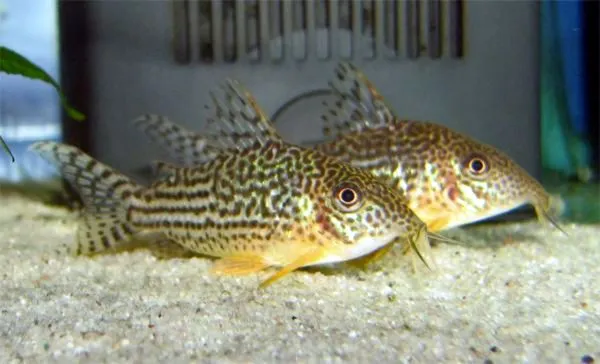
Answer: A cory catfish can dart up for an occasional gulp because cories can use atmospheric air. Repeated gasping, hanging near the surface, clamped fins, or other fish breathing hard points to a water or oxygen problem. Test ammonia and nitrite, add surface movement, and check temperature.
Best first step: Test ammonia and nitrite, then add surface agitation while you work through the cause.
Avoid: Do not assume every surface gulp is disease; corydoras naturally breathe air, so look for pattern changes and other stress signs.
A cory catfish that darts up, gulps once, and drops back down is usually fine. A cory that hangs near the surface, pants hard, tilts upward, or does it alongside other fish is not fine. Add surface movement first, then test ammonia, nitrite, and temperature before adding any treatment.
The question is not whether your corydoras goes to the surface. It is how often, for how long, and in what posture.
Part of the Complete Catfish Guide.
Normal Intestinal Breathing vs Distress
Healthy corydoras make short, purposeful trips to the surface every few minutes. The sequence is fast: swim up, open the mouth briefly, and descend. In a well-oxygenated tank the trips are less frequent; in warmer or still water they increase. This is normal behaviour and does not require intervention.
Distress looks completely different. The fish lingers near the surface with the mouth opening and closing repeatedly, without the clean dart-and-dive rhythm of intestinal breathing. The operculum (gill cover) pumps visibly faster than usual. The body may tilt nose-upward. The fish does not return promptly to the substrate.
If you see that pattern across more than one fish, treat it as an emergency.
Quick answer: normal gulp or emergency?
A normal trip is brief and purposeful: up, one gulp, back to the substrate. Trouble looks slower and messier. The fish stays high in the tank, the gills pump fast, or several fish gather near the surface at the same time. If you are unsure, treat it as oxygen stress first because extra surface movement is safe and buys time.
Main Causes
| Cause | What is happening | First action |
|---|---|---|
| Low dissolved oxygen | Water warm, still, or overstocked; gills and hindgut both fail to extract enough O₂ | Increase surface agitation; check the filter is running |
| Ammonia or nitrite | Gill epithelium damaged; gas exchange impaired even in otherwise oxygenated water | Test water; 30–50% water change with dechlorinated water immediately |
| Overheating | O₂ solubility drops sharply above 27 °C; most Corydoras prefer 22–26 °C | Check thermometer; reduce temperature gradually |
| Gill flukes (Dactylogyrus, Gyrodactylus) | Parasites on gill lamellae disrupt gas exchange directly | Treat with praziquantel; do not use salt |
| Toxic medication | Copper, formalin, malachite green, or salt at therapeutic dose damage scaleless skin and gills | Stop treatment; large water change; add activated carbon |
| Substrate bacteria tracking to gills | Barbel abrasion from coarse gravel allows bacteria to reach gill tissue over time | Inspect barbels; plan a switch to fine sand |
| Airborne contamination | Paint fumes, aerosols, or smoke entering via the air pump intake | Move the air pump intake away from the contaminated area |
| Wrong water chemistry | Very high TDS, strong alkalinity from limestone hardscape, or extreme pH | Test hardness and pH against the species requirements |
More than one cause can be active at once. A tank running slightly warm, slightly overstocked, on coarse gravel puts its corydoras under combined load before any single parameter reaches a textbook alarm threshold.
How to Identify the Problem
Start with a visual check before reaching for test kits.
Barbel condition. Look at the fish face-on. Healthy barbels are slender, symmetrical, and reach the full length expected for the species. Shortened, blunt, or pale barbels signal long-term abrasion or bacterial infection. Barbel damage alone does not cause surface gasping, but it tells you the substrate environment is already stressing the fish.
Which fish are affected. If pygmy corydoras and other sensitive bottom-dwellers gasp while surface fish appear unaffected, low dissolved oxygen is the leading suspect: oxygen-depleted water sinks. If the whole tank gasps at once, suspect ammonia, nitrite, CO2 accumulation, or a tank-wide toxin.
Opercular rate. Count gill movements over 15 seconds and multiply by four. A resting bronze corydoras (Corydoras aeneus) at 24 °C breathes roughly 40–80 times per minute. Rates above 100, or clearly asymmetric gill movement on one side, warrant immediate investigation.
Water surface. A flat, glassy surface in a warm room is a practical red flag. Dissolved oxygen at 28 °C is roughly 25% lower than at 22 °C, and fish metabolic demand is simultaneously higher, so the deficit is real even before you test.
Run ammonia, nitrite, and temperature checks. If the tank has been recently medicated, review exactly what was added and at what dose.
Risk and Severity
Corydoras are disproportionately vulnerable to two of the most common causes of surface gasping: ammonia poisoning and medication toxicity.
Their skin lacks the protective scales of most community fish. Compounds that cross tissue barriers easily — copper, organic dyes, malachite green, salt at therapeutic doses — affect corydoras at concentrations that only mildly stress other species. Noga (2010) identifies catfish as among the most chemically sensitive of freshwater groups, a fact that most general aquarium advice does not adequately reflect.
Ammonia damages gill tissue cumulatively. A fish that survives an acute episode can carry scarred gill lamellae for weeks, making it more susceptible to low-oxygen stress even after water quality fully recovers.
Surface gasping in corydoras can progress to death within hours when the cause is acute ammonia poisoning or a heavy gill-fluke burden. Do not wait overnight to assess.
Solutions and Actions
Work through these in order.
- Increase surface agitation immediately. Aim a filter return toward the surface, drop an airstone in, or lift the outlet pipe so it breaks the water film. This single step does the most good across every possible cause.
- Test ammonia, nitrite, and temperature. A liquid kit such as the API Freshwater Master Test Kit is useful because strips often miss low but dangerous ammonia. Any detectable ammonia or nitrite calls for a 30–50% water change with temperature-matched, dechlorinated water. Disclosure: As an Amazon Associate, we earn from qualifying purchases, at no extra cost to you.
- Stop any ongoing medication. Gasping that started within 24–48 hours of treatment is very likely the treatment. Remove it with a large water change and activated carbon where available.
- Check the thermometer against a second reading. Aquarium heaters fail in both directions. A heater stuck fully on has caused more corydoras losses than most hobbyists realise.
- Plan a substrate change if you are running coarse gravel. This will not resolve an emergency, but removing the background stress that made the fish vulnerable matters. Substrate selection covers the practical comparison.
- Check the air pump intake location. If it draws from a kitchen, garage, or any room where aerosols or fresh paint are present, the fish may be breathing contamination directly.
For the full triage sequence that applies to all fish species, the detailed protocol is at why are my fish gasping at the surface. This article covers what is distinct for corydoras.
Prevention
The conditions that produce distress surfacing in corydoras are almost entirely preventable.
Fine sand substrate. Corydoras push their mouths into the substrate repeatedly during normal foraging. Coarse gravel abrades barbels, traps decomposing food, and builds bacterial films at exactly the height where the fish feeds. Bronze corydoras and panda corydoras both show markedly better barbel and gill health on fine rounded sand than on gravel.
Consistent surface movement. A sponge filter or a slightly angled filter return is enough. The goal is a visible ripple across the surface, not strong turbulence — the ripple disrupts the still film that otherwise impedes gas exchange.
Correct temperature. Most Corydoras species do well at 22–26 °C. Corydoras panda prefers 21–25 °C; Corydoras sterbai is an exception tolerating up to 28 °C. Building a community around warm-water species at 28–29 °C places most corydoras under chronic oxygen stress even when filtration is otherwise sound.
Quarantine before introduction. Corydoras frequently arrive from export carrying gill flukes. A two-week quarantine in a seeded, bare tank at the correct temperature, with regular feeding, lets gill problems manifest before they reach a display aquarium. The full procedure is at quarantine tank protocol.
Medication caution. Before treating any tank that holds corydoras, confirm the compound is safe for scaleless catfish. Copper-based treatments and organophosphates require either dose reduction or a corydoras-safe alternative.
Common Mistakes
- Using salt. Salt is among the most widely recommended aquarium remedies and one of the most harmful for corydoras. It reduces dissolved oxygen and damages scaleless skin — the opposite of what a gasping fish needs.
- Dismissing surface trips as normal hindgut breathing. "Corydoras breathe air" is accurate, but it is used to rationalise genuine distress. Confirm the pattern before deciding nothing is wrong.
- Assuming all surface trips mean distress. The mirror-image mistake. Healthy corydoras do visit the surface. Unnecessary treatment of a normal fish adds stress without benefit.
- Treating the symptom without diagnosing the cause. Adding oxygen supplements or surface agitation while the heater is stuck at 30 °C, or while ammonia is rising, buys minutes rather than solving anything.
- Leaving coarse gravel in place after barbel damage appears. Gravel damage is slow, cumulative, and real. Monitoring without removing the cause only delays an outcome that becomes harder to reverse the longer it continues.
Quick triage when corydoras keep surfacing
Run a liquid water test before changing medications or adding more fish. Ammonia and nitrite are the urgent numbers, and nitrate gives useful background. A kit like the API Freshwater Master Test Kit is more useful here than guessing from clear-looking water. If ammonia or nitrite is above zero, do a partial water change and increase surface movement right away.
As an Amazon Associate, we earn from qualifying purchases, at no extra cost to you.
Quick answer: normal gulp or emergency?
A normal cory trip is fast and purposeful: up, one gulp, back to the sand. Treat it as an emergency when the fish stays high in the tank, pumps its gills, loses balance, or several fish gasp at once.
Check water before you change equipment
Test ammonia and nitrite first. Both should read zero. Then check nitrate, temperature, and whether the filter is rippling the surface. Warm water holds less oxygen, so a tank at the high end of the corydoras range can become stressful faster than it looks.
Keep a basic freshwater test kit or test strips nearby so you are not guessing during a gasping episode. As an Amazon Associate, we earn from qualifying purchases, at no extra cost to you. This Amazon search is for freshwater aquarium nitrate test strips: https://www.amazon.com/s?k=aquarium+nitrate+test+strips+freshwater&tag=dovab015-20&ref=sr_nr_p_36_0&i=pets
If ammonia or nitrite shows up, do a partial water change, add extra aeration, and pause feeding until the numbers are safe. If tests look clean but the fish still gasp, aim the filter outlet toward the surface or add an air stone while you look for a clogged filter, dead plant matter, or an overcrowding issue.
How to tell normal gulping from trouble
One quick dash to the surface is usually just cory behavior. A pattern is different. If the same fish keeps returning to the surface or pauses there with rapid gill movement, check the tank instead of assuming it is normal.
- Test ammonia and nitrite first. Either one can burn gills and make fish breathe hard.
- Point the filter outlet at the surface or add an air stone if the water looks still.
- Check temperature, especially during hot weather or after a heater change.
Do a partial water change if ammonia or nitrite shows up. Extra oxygen helps, but clean water is the fix when the test kit shows a problem.
Frequently Asked Questions
Is it normal for cory catfish to gulp air?
Yes, an occasional quick trip to the surface is normal. Corydoras can gulp air and absorb oxygen through the gut.
When is surface gasping an emergency?
Treat it as urgent if the cory stays near the surface, breathes fast, loses balance, or other fish are breathing hard too. Test ammonia and nitrite and increase surface movement right away.
Can warm water make cories gasp?
Yes. Warm water holds less oxygen. If the tank is running hotter than usual, increase aeration and bring the temperature back into the safe range for the species.
Sources & References
- Burgess, W.E. (1989). An Atlas of Freshwater and Marine Catfishes. T.F.H. Publications.
- Noga, E.J. (2010). Fish Disease: Diagnosis and Treatment. Wiley-Blackwell.
- Kramer, D.L. & McClure, M. (1982). Aquatic surface respiration, a widespread adaptation to hypoxia in tropical freshwater fishes. Environmental Biology of Fishes, 7(1): 47–55.
- FishBase Corydoras species accounts. https://www.fishbase.se/