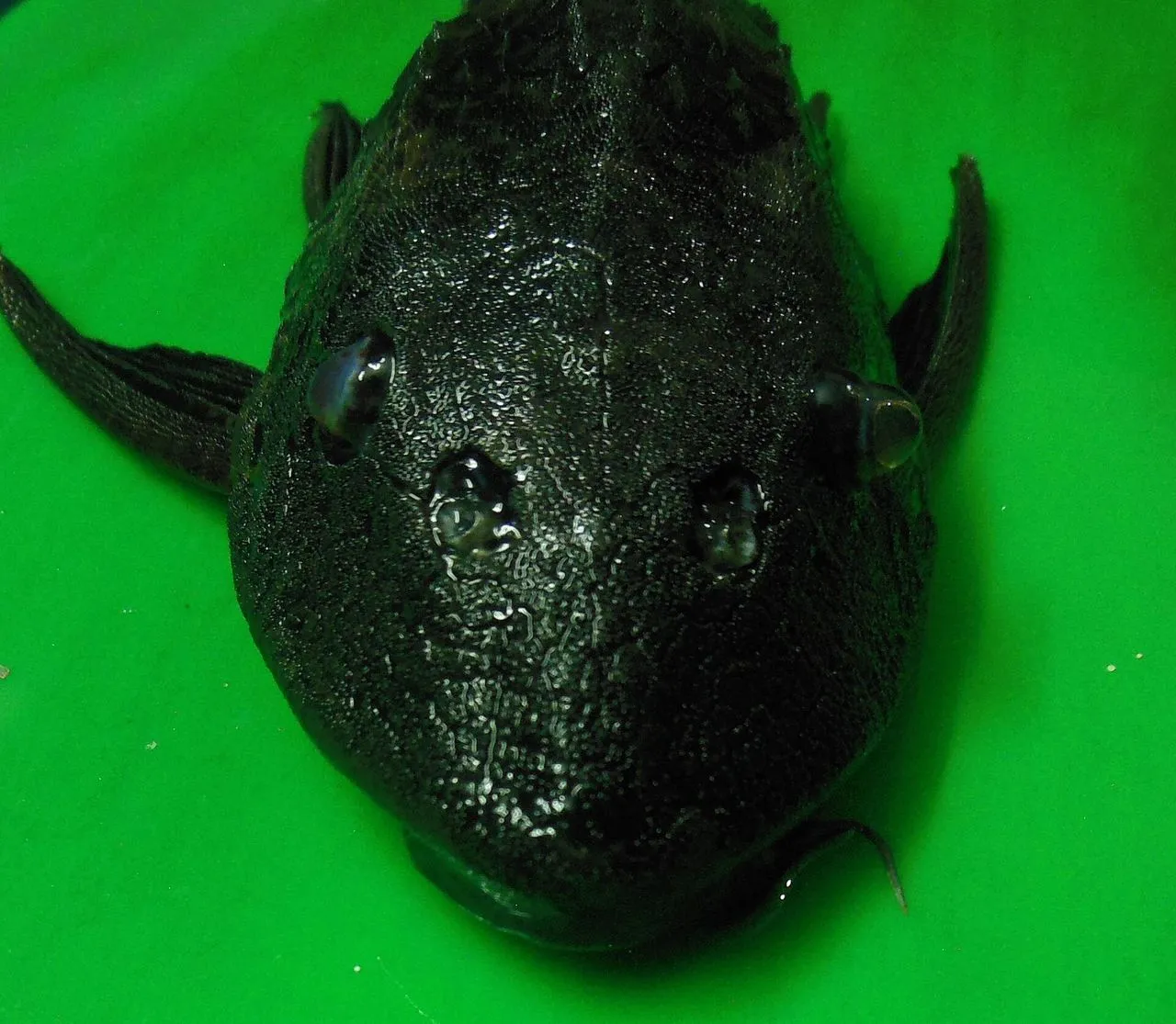
Answer: The common pleco (*Pterygoplichthys multiradiatus*) is not a 50-litre algae cleaner. It can reach 45–60 cm, produces heavy waste, digs, and needs several hundred litres as an adult. Juveniles are hardy, which is precisely why they are oversold. Choose bristlenose or otocinclus for ordinary community aquaria.
Pterygoplichthys multiradiatus (common pleco) is an aquarium catfish whose care is defined by adult size, feeding surface, and oxygen demand. The label "pleco" or "algae eater" is too crude; the difference between a small biofilm grazer and a half-metre wood-and-detritus machine is the difference between a successful aquarium and a welfare problem.
Part of the Complete Catfish Guide.
Identification
A tall sail-like dorsal fin, heavy spotted body, armoured plates, and rapidly increasing girth separate common Pterygoplichthys from small plecos. The mouth is ventral and rasping, but the fish is not a specialist glass cleaner once grown.
| Requirement | Target |
|---|---|
| Adult size | 45–60 cm |
| Social plan | Keep one adult unless the aquarium is very large with multiple caves and broken sight lines. Adults are not schooling fish and may become territorial around food and shelter. |
| Temperature | 23–28 °C |
| GH / KH | GH 3–18 °dH; KH 2–10 °dH |
| pH / conductivity | pH 6.5–8.0; 150–600 µS/cm |
| Aquarium | 450 litres minimum for long-term care; larger systems are easier |
Identification should be made before purchase, not after the fish has outgrown the tank. Compare similar loricariids such as bristlenose pleco, royal pleco, and clown pleco and reject vague labels such as "algae pleco" when adult size is not supplied.
Origin & Habitat
Native range includes slow South American drainages, floodplain margins, and bank habitats where large loricariids graze, excavate, and exploit detritus. Introduced populations in warm regions such as Florida show why release is unacceptable: burrowing damages banks and the fish compete with native fauna.
Wild habitat translates directly into aquarium engineering. A fish from warm floodplain wood tangles needs different current, food, and shelter from a fish from cool stony streams. Matching that ecology is more reliable than chasing a generic community-tank recipe.
Aquarium Husbandry
The aquarium must be planned like housing for a large herbivorous fish with armour. Use strong biological filtration, large water changes, securely placed wood, open floor space, and covers heavy enough to prevent escapes. A 6 cm juvenile in a shop tank gives no useful impression of adult demand.
Use 450 litres minimum for long-term care; larger systems are easier. Keep ammonia and nitrite at 0 mg/L and nitrate preferably below 20 mg/L. If the aquarium is new, mature it first; cycling a new aquarium explains why catfish added too early often decline even when other fish appear unaffected. If hardness must be adjusted, use the principles in water hardness explained rather than pH-down routines.
Substrate is less important for sucker-mouthed loricariids than for corydoras, but layout still matters. Caves must fit the fish, wood must not collapse, and food must be retrievable before it rots. The general trade-offs are covered in substrate selection.
Tankmates & Behaviour
Keep one adult unless the aquarium is very large with multiple caves and broken sight lines. Adults are not schooling fish and may become territorial around food and shelter.
Tankmates should be chosen by mouth size, temperament, and chemistry. Peaceful characins from the complete tetras guide often work in soft-water systems. For cichlid aquaria, consult the complete cichlids guide; a bottom position does not protect a catfish from territorial attacks.
Diet
Feed vegetable matter, sinking wafers, blanched courgette, leafy greens, occasional protein, and wood for grazing surfaces. It will eat some algae but cannot live as a maintenance tool — the common pleco's diet shift to omnivore explains why algae expectations rarely match adult reality. Underfed adults rasp plants and harass slow fish for slime.
Do not confuse rasping with cleaning. A healthy grazing catfish turns plant, wood, algae, and prepared food into substantial waste. Filtration and water changes must match that conversion. For vegetable foods, offer small portions and remove leftovers before they sour.
Breeding
Breeding is not a home-aquarium target. Pterygoplichthys dig burrows in earthen banks and guard eggs; this behaviour is one reason introduced populations damage waterways.
Where breeding is realistic, provide secure caves or surfaces, excellent oxygen, and stable water. Where it is unrealistic, do not use failed breeding as evidence of poor care; many large or imported loricariids have reproductive requirements not easily reproduced in home aquaria.
Common Problems
The predictable failure is adult-size shock. Stunting is not a solution; it is chronic poor welfare. Rehoming large plecos is difficult because many public aquaria and shops already refuse them.
Quarantine new loricariids and observe faeces, belly shape, respiration, and grazing behaviour. A fish that clings motionless but loses body mass is not resting; it is declining.
Long-Term Planning Notes
The ethical decision point for this species comes before purchase. A small juvenile can look appropriate in a dealer's tank because the dealer is holding it temporarily, not housing the adult animal. In a home aquarium, the keeper must account for adult turning radius, oxygen demand, faecal production, and the difficulty of moving a spiny armoured fish once it is large. The pectoral and dorsal spines catch in nets; transport is safer in a rigid tub.
A suitable system is usually closer to a large cichlid or turtle installation than a decorative community aquarium. Wood must be stable, heaters must be protected, and glass lids should fit well. If the goal is algae management in an ordinary planted tank, bristlenose pleco, otocinclus, or manual maintenance are more responsible choices.
See Also
Frequently Asked Questions
How large does the common pleco get?
Expect 45–60 cm. Buy for adult size, not the juvenile size normally seen in shops.
What water parameters should I use?
Use 23–28 °C, GH 3–18 °dH, KH 2–10 °dH, pH 6.5–8.0, and conductivity around 150–600 µS/cm. Oxygen and stability are as important as pH.
Is the common pleco an algae cleaner?
It may graze algae or biofilm, but it is livestock, not equipment. Provide the correct staple diet and remove waste through normal maintenance.
Can it live with cichlids?
Only with compatible size, temperature, and water chemistry. Territorial or predatory cichlids can injure or eat catfish, while hard-water Rift systems suit only selected species.
Sources & References
- Burgess, W.E. (1989). An Atlas of Freshwater and Marine Catfishes. T.F.H. Publications.
- Sands, D. (1984). A Fishkeeper's Guide to South American Catfishes. Salamander Books.
- Evers, H.-G. & Seidel, I. (2005). Mergus Wels Atlas. Mergus Verlag.
- FishBase species account. https://www.fishbase.se/
- Fricke, R., Eschmeyer, W.N. & Van der Laan, R. Catalog of Fishes. California Academy of Sciences.