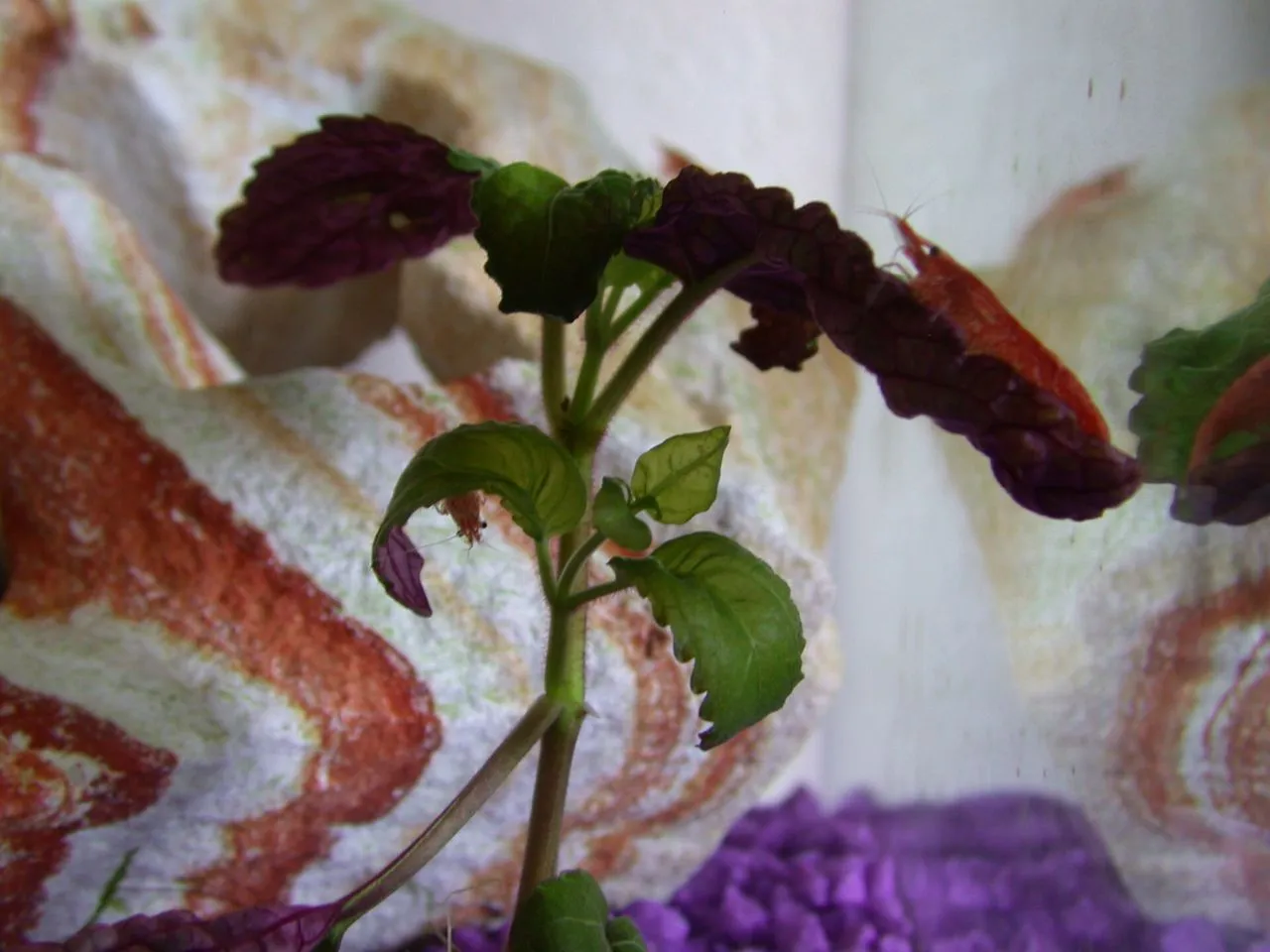
Answer:
Freshwater shrimp and snails are chemically precise livestock, not decorative cleaners. Neocaridina shrimp suit stable tap water; bee-type Caridina require low-KH RO systems. Snails process waste but still add bioload. Copper, unstable TDS, immature biofilm, and unsuitable fish tankmates cause most avoidable losses.
Freshwater invertebrates are not ornaments added after the fish are chosen. In a planted aquarium, Neocaridina davidi (cherry shrimp), Caridina cantonensis (crystal shrimp), Pomacea bridgesii (mystery snail), nerites, ramshorns, and filter-feeding atyids each alter grazing pressure, detritus processing, mineral demand, and stocking decisions. The category name on Tank & Tendril is Shrimp & Snails because those are the animals aquarists actually keep, but the useful lens is broader: crustacean moulting physiology on one side, gastropod growth and reproduction on the other.
I am Dr. Helena Marlow, and dwarf shrimp have been the constant side project beside my cichlid work for three decades. The best shrimp tanks in my fish room have not been the most expensive ones. They have been chemically boring: stable GH, modest nitrate, no copper surprises, moss thick enough to graze, and no clever weekly corrections.
Taxonomy
Most aquarium freshwater shrimp belong to Atyidae, a family of decapod crustaceans adapted either to grazing biofilm or filtering suspended food from current. Christoffersen's treatment of atyid relationships remains useful because it separates the aquarium genera by functional anatomy, not colour names. Neocaridina and many Caridina are small grazing shrimp with chelate walking legs used to pick microorganisms from leaves, wood, stones, and sponge filters. Atya gabonensis and Atyopsis moluccensis are larger stream shrimp with fan-shaped maxillipeds built for current feeding.
The trade makes taxonomy seem simpler than it is. Cherry shrimp, yellow shrimp, and blue dream shrimp are colour lines of Neocaridina davidi. They do not represent separate species, and mixing them usually produces wild-type olive or brown offspring within one or two generations. Crystal red shrimp, black crystal shrimp, and Taiwan bee shrimp are bee-shrimp lines within the Caridina cantonensis complex. Logemann's writing on dwarf-shrimp genetics is valuable here: colour inheritance is line-breeding, not magic, and phenotypes are maintained by selection and culling.
The familiar Amano shrimp, Caridina multidentata, sits apart. It is a robust algae-grazing shrimp but not a self-replacing freshwater colony species, because the larvae require brackish to marine conditions. Ghost shrimp, usually Palaemonetes paludosus in the North American trade, belongs to Palaemonidae rather than Atyidae and has a more predatory feeding style than dwarf grazers.
Aquarium snails are still more mixed. Mystery snail is Pomacea bridgesii, an apple snail with separate sexes, lungs and gills, and egg clutches laid above the waterline. Nerite snail covers several neritid genera sold under Neritina and relatives; their larvae require salt water, which is why they do not overrun freshwater tanks. Ramshorn snails are planorbids. Bladder snails, often Physella acuta, are sinistral pulmonates that arrive on plants. Malaysian trumpet snails, Melanoides tuberculata, are live-bearing thiarids. Assassin snails, Anentome helena, are predatory buccinids adapted to hunting other gastropods.
| Group | Representative species | Reproduction in aquarium | Practical consequence |
|---|---|---|---|
| Neocaridina | Cherry, yellow, blue dream | Direct-developing freshwater young | Easy colony if copper-free and stable |
| Bee-type Caridina | Crystal red, black crystal, Taiwan bee | Direct-developing freshwater young | RO water, low KH, low TDS |
| Amphidromous shrimp | Amano, bamboo, vampire | Larvae need brackish or marine water | Adults thrive; breeding is specialist work |
| Apple and nerite snails | Mystery, nerite | Air-laid eggs or saltwater larvae | Controlled reproduction in freshwater |
| Hitchhiker snails | Ramshorn, bladder, Malaysian trumpet | Rapid self-replacement | Population tracks feeding level |
Identification
Shrimp identification begins with body plan. Neocaridina davidi is compact, usually 2–3 cm, with females deeper-bodied and carrying a saddle of developing ova behind the head before eggs move under the abdomen. The colour line tells less than the body: red, yellow, blue, chocolate, orange, and rili forms are all the same species in aquarium terms. Bee-type Caridina cantonensis are slightly more delicate in outline, often with bold white banding or patterned high-grade markings, and they behave less forgivingly when KH rises.
Fan shrimp are unmistakable once their feeding appendages open. Atyopsis moluccensis is a tan to reddish, laterally striped shrimp that stations itself in current. Atya gabonensis is heavier, blue-grey to brown, and can reach 12–15 cm. If either species is walking around sweeping the substrate with closed fans, it is not foraging happily; it is scavenging because the current does not carry suspended food.
Snail identification is equally practical. Mystery snails have a large globose shell, long tentacles, and a siphon used for breathing air. Nerites have hard, low-spired shells and rasp algae with unusual efficiency, but white sesame-like egg capsules on hardscape are common. Ramshorns carry a flat spiral shell; bladder snails have a small left-handed shell and glide rapidly along glass. Malaysian trumpet snails are conical, mostly nocturnal, and burrow through sand. Assassin snails have a yellow-and-brown banded conical shell and a probing siphon.
Behaviour & Ecology
The central biological fact for shrimp is moulting. A shrimp grows by splitting the old cuticle, extracting water to expand the body, and then hardening a new exoskeleton with minerals. Post-moult mortality clusters around two causes. First, high-TDS shock prevents the animal from taking in enough water during ecdysis; the visible failure is shrimp turning white at the ring near the cephalothorax-abdomen junction. Second, mineral deficiency, especially insufficient calcium availability and sometimes iodine imbalance, prevents clean separation of the cuticle. Preventing moult failure requires stable GH, appropriate TDS, a mineral source such as cuttlebone or shrimp mineral, and restrained water changes matched to the tank, not constant dosing.
Copper is the other non-negotiable. Dwarf shrimp die at concentrations that fish may tolerate. Copper pipes, copper-based medications, and some trace fertilisers can all matter. Medication names change by market, but copper sulphate and chelated copper on a label are reason enough to remove shrimp and snails before treatment. The care articles on cycling a new aquarium and water hardness should be read before stocking expensive shrimp because both nitrogen spikes and mineral swings kill faster than most infections.
Snails behave less dramatically, so they are often misread. Ramshorn and bladder snails do not create excess food; they reveal it. A population explosion is a feeding audit. Mystery snails, however, are not free cleaning staff. A mature Pomacea produces enough waste to count in stocking calculations, and it requires calcium-rich water to prevent shell erosion. Malaysian trumpet snails aerate the upper substrate and consume trapped food, but a sudden mass surface migration can indicate low oxygen or substrate fouling. Mystery snails and nerites showing snail escape behaviour above the waterline respond to the same triggers.
Water Chemistry & Habitat
The split between Neocaridina and bee-type Caridina is the most important chemistry distinction in this category. Neocaridina davidi belongs in ordinary, dechlorinated tap water if that water is stable: GH 6–14 °dH, KH 2–8 °dH, pH 6.8–7.8, TDS 150–350 ppm, and conductivity roughly 250–600 µS/cm. Chasing a fashionable low TDS number is a common way to weaken a hardy shrimp.
Bee-type Caridina cantonensis requires the opposite discipline: RO or very soft rainwater, remineralised to GH 4–6 °dH with KH 0–1 °dH, pH 5.5–6.8, TDS 80–150 ppm, conductivity around 120–240 µS/cm. Active aquasoils are used because they buffer pH downward and consume carbonate. They are not a decorative substrate choice; they are a chemical tool. The reverse osmosis water guide covers why pure RO must be remineralised before animals are added.
Snails usually prefer mineral availability. Mystery snails, ramshorns, bladder snails, Malaysian trumpets, and assassins do best with GH at least 6 °dH and KH 3–8 °dH so shell growth is not undermined. Sulawesi rabbit snails are not one of the satellites here, but they illustrate the principle sharply: Tylomelania from Lake Poso and Lake Matano are live-bearing gastropods needing hard alkaline water, commonly GH 8+ °dH, KH 6+ °dH, and pH 7.5+. Soft acidic shrimp water is hostile to many shells.
Aquarium Husbandry
A shrimp or snail tank begins with biofilm, not the animal. Mature sponge filters, old driftwood, moss, botanicals, and slow-growing epiphytes such as java moss, Christmas moss, and Anubias nana provide continuous grazing surfaces. New sterile tanks can have perfect numbers and still starve juveniles.
Tankmates must be chosen by mouth size and hunting habit. Chili rasbora, ember tetra, pygmy corydoras, otocinclus, and sometimes sparkling gourami are among the safer companions for adult dwarf shrimp, though newborn shrimplets still need moss cover. German blue ram may work in a warm soft community with Amano shrimp but is not reliable with dwarf-shrimp young. Angelfish, dwarf gourami, and most loaches should be assumed to eat shrimp. Clown loach is relevant to snail keepers because it will consume many snails and grows far beyond the casual community tank.
Filtration should protect larvae and juveniles. Sponge filters are ideal. Canister intakes need pre-filter sponges. Flow must match species: dwarf shrimp like gentle turnover and oxygen; bamboo and vampire shrimp need a defined current at least 10 cm/s past a perch where fans can intercept food. Still-water fan shrimp slowly starve even when the aquarist adds powdered food.
Acclimation and quarantine
Invertebrate acclimation is often described as delicate because keepers focus on time rather than gradients. The relevant gradient is dissolved solids. A shrimp moved from 110 ppm TDS bag water into a 290 ppm tank has experienced a different event from a shrimp moved from pH 6.4 to pH 6.8 at the same TDS. For dwarf shrimp, measure the bag and the tank, then drip or cup-acclimate until the difference is modest, ideally under 30–50 ppm before release. Temperature should be matched as well, but a one-degree difference is less important than a sudden osmotic jump.
Quarantine is not only for fish. Imported shrimp can carry bacterial problems, scutariella-like epibionts, vorticellids, or simply the consequences of poor shipping. Snails can carry leeches, planaria, and unwanted eggs on shells. A bare quarantine box is a poor invertebrate environment, so use a mature sponge filter, a piece of old wood or moss, and water from the intended chemistry band. Four weeks is enough to observe feeding, moulting, shell condition, and hidden mortality before the animals enter a display containing valuable breeding stock.
Never prophylactically medicate shrimp in the way some aquarists medicate fish. Many fish remedies are more dangerous to crustaceans than the suspected parasite. Salt dips, copper remedies, and formalin combinations should not be improvised. If the problem is external fouling, the first correction is usually cleaner water, more oxygen, reduced organic load, and removal of dead tissue. If the problem is planaria, hydra, or leeches, identify it before treatment because snail-safe, shrimp-safe, and fish-safe do not mean the same thing.
Breeding control and line management
Direct-developing shrimp colonies can double quickly when food and cover are abundant. That is useful for a breeding tank and inconvenient in a display where colour quality matters. The reverse, a colony failing to reproduce, usually points to predation pressure, inadequate food, or water drifting outside target parameters. Keep one Neocaridina davidi colour line per tank if the aim is red, yellow, blue, orange, or rili offspring. A mixed-colour colony is not unethical; it simply becomes a wild-type colony. Within a line, remove pale or oddly patterned adults if the visual goal matters. Do this calmly and early rather than after three generations have diluted the trait.
Bee shrimp require the same genetic discipline with a narrower health margin. High-grade Taiwan bee projects can become fragile when every breeding decision is made for pattern. Retain robust animals, not only perfect ones. Females that carry large clutches, moult cleanly, and graze constantly are more valuable to the long-term colony than a single dramatic pattern on a weak adult. Logemann's work is a useful corrective to trade mythology: most colour lines are maintained populations, not fixed guarantees.
Snail population control is simpler because it is almost always food control. Ramshorn, bladder, and Malaysian trumpet snail numbers follow surplus food, decaying plants, and dead animals. Reducing feeding, removing melting leaves, and maintaining oxygen solves the cause. Assassin snails can be useful when a keeper wants to reduce visible snails, but they do not remove the excess food that produced the outbreak. Once prey is exhausted, assassins need meaty food or they decline. Mystery snail reproduction is controlled by removing the air-laid clutch before it hatches. Nerites usually need no control because their larvae do not settle in freshwater.
Stocking density and bioload
Shrimp stocking is limited less by body mass than by grazing surface, oxygen, and stability. A mature 40-litre shrimp-only tank may support hundreds of cherry shrimp because each animal is small and the biofilm web is established. The same tank with ten new shrimp, no moss, fresh aquasoil, and enthusiastic feeding may be less stable. Count feeding response and nitrate trend rather than only animal number. A colony that leaves food after two hours is being overfed even if the population looks large enough to justify the ration.
Snail stocking is more conventional. A full-grown mystery snail should be counted roughly like a small fish for waste planning. Nerites and small ramshorns produce less individual waste, but a hundred small snails are still a biological load. Good snail tanks have ordinary filtration, oxygen, and water changes; they are not exempt because the animals are sold as cleaners. The useful distinction is that snails convert hidden organic matter into visible bodies and faeces. That makes maintenance easier to diagnose, not unnecessary.
Plant and hardscape choices
The best invertebrate aquaria are usually untidy at the microscopic scale and tidy at the chemical scale. Fine-leaved moss, old wood, botanicals, and sponge filters carry biofilm. Smooth new stones and plastic décor do not. Leaf litter from safe hardwood species can feed microbial communities, but it should be used in amounts that the filter can process. In low-KH bee shrimp tanks, botanicals can push pH downward; in hard snail tanks, they rarely matter chemically but still add grazing surfaces.
Substrate choice follows chemistry. Active aquasoil is appropriate for crystal and Taiwan bee shrimp when the aim is KH 0–1 °dH and pH below neutral. It is not appropriate for mystery snails if it strips carbonate and produces shell erosion. Sand works well for Malaysian trumpet snails and for display tanks where detritus must remain visible. Gravel traps food and can support snail blooms if the keeper feeds heavily. In every case, the substrate is part of the filtration and mineral system rather than a neutral decoration.
Notable Species
- Cherry shrimp (Neocaridina davidi) — the standard beginner dwarf shrimp for stable tap water.
- Yellow shrimp (Neocaridina davidi var.) — a yellow line maintained by separating colours and culling weak stock.
- Blue dream shrimp (Neocaridina davidi var.) — attractive blue line; mixing with red or yellow produces wild-type young.
- Crystal red shrimp (Caridina cantonensis var.) — soft-water bee shrimp requiring RO water and low KH.
- Black crystal shrimp (Caridina cantonensis var.) — same husbandry as crystal red, with black-and-white patterning.
- Taiwan bee shrimp (Caridina cantonensis high-grade lines) — pinto, galaxy, king kong, and related high-investment lines.
- Amano shrimp (Caridina multidentata) — exceptional algae grazer with brackish larval development.
- Ghost shrimp (Palaemonetes paludosus) — transparent palaemonid, useful but variable in quality and temperament.
- Vampire shrimp (Atya gabonensis) and bamboo shrimp (Atyopsis moluccensis) — large fan feeders that require current and suspended food.
- Mystery snail, nerite snail, ramshorn snail, bladder snail, Malaysian trumpet snail, and assassin snail — the practical snail set, from deliberate pets to hitchhikers and predators.
Common Confusions
| Confusion | Reliable separator | Husbandry consequence |
|---|---|---|
| Neocaridina vs bee Caridina | Neocaridina tolerates KH and higher TDS; bee shrimp do not | Tap water for Neocaridina, RO plus minerals for bee shrimp |
| Cherry vs yellow vs blue dream | Colour line only within N. davidi | Do not mix lines if colour matters |
| Amano vs ghost shrimp | Amano has broken lateral spots/dashes; ghost shrimp is clearer and more predatory | Amano grazes algae better and will not breed in freshwater |
| Bamboo vs vampire shrimp | Bamboo is slimmer and striped; vampire is heavier and blue-grey | Both need strong directional flow |
| Ramshorn vs bladder snail | Flat spiral shell vs small left-handed shell | Both populations track feeding level |
| Assassin snail vs Malaysian trumpet snail | Banded predatory cone vs slender burrowing cone | Assassins will reduce small snail populations |
See Also
- Water Hardness: GH and KH Explained — essential chemistry background for shrimp and snails.
- Reverse Osmosis Water — remineralisation for crystal and Taiwan bee shrimp.
- Cycling a New Aquarium — why invertebrates should not be placed in unstable tanks.
- Java Moss — grazing cover and shrimplet refuge.
- Chili Rasbora — one of the better fish companions for dwarf shrimp.
- Otocinclus — algae-grazing fish often paired with shrimp in mature planted tanks.
Frequently Asked Questions
What is the difference between Neocaridina and Caridina shrimp?
Neocaridina davidi is the tap-water dwarf shrimp: GH 6–14 °dH, KH 2–8 °dH, pH 6.8–7.8, TDS 150–350 ppm. Bee-type Caridina cantonensis is a soft-water shrimp: GH 4–6 °dH, KH 0–1 °dH, pH 5.5–6.8, TDS 80–150 ppm, usually RO water plus remineraliser.
Are shrimp sensitive to copper?
Yes. Copper is lethal to dwarf shrimp at sub-ppm concentrations. Avoid copper medications, check plant fertilisers, and be cautious with source water from new copper plumbing. Activated carbon and water changes help after accidental exposure, but prevention is far more reliable.
Do aquarium snails ruin water quality?
No, but they are not weightless. A large mystery snail produces waste roughly comparable with a small fish. Snails become a water-quality problem when overfed tanks support excessive reproduction, not because the animals are inherently dirty.
Can fish live with dwarf shrimp?
Some can, but baby shrimp are food for most fish. Chili rasboras, ember tetras, pygmy corydoras, otocinclus, and sparkling gouramis are among the safer choices. Angelfish, dwarf gouramis, loaches, and most cichlids will eat juveniles or adults.
Sources & References
- Werner, U. (1998). Atlas der Wirbellosen im Aquarium. Mergus Verlag.
- Lukhaup, C. & Pekny, R. (2008). Süßwassergarnelen aus aller Welt. Dähne Verlag.
- Coleman, N. (2003). Aquarium Snails. Aquatic Photographics.
- Christoffersen, M.L. (1986). Phylogenetic relationships between Oplophoridae, Atyidae, Pasiphaeidae, Alvinocarididae and Bresiliidae. Crustaceana.
- SeaLifeBase — freshwater decapod and gastropod species accounts. https://www.sealifebase.ca/
- <a href='https://www.iucnredlist.org/'>IUCN Red List</a> — conservation assessments for freshwater invertebrates