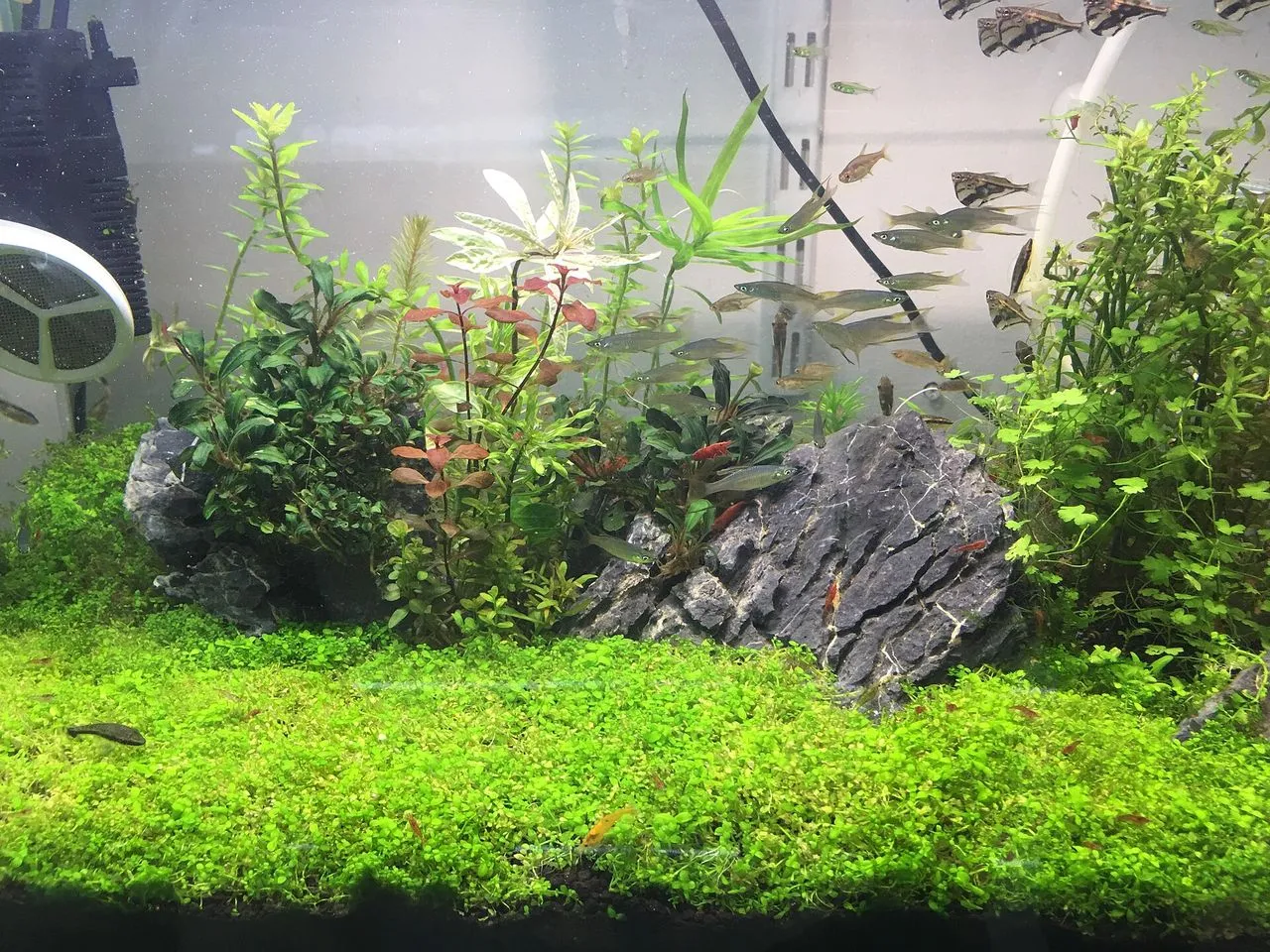
Answer: Surface gasping is an emergency, not an aesthetic problem. The four common causes are low dissolved oxygen, ammonia or nitrite poisoning, gill parasites (flukes or ich), and CO2 overdose in a planted tank. Add surface agitation immediately, test ammonia and nitrite, and identify the cause within minutes — fish die from gill failure faster than they die from almost anything else.
Surface gasping is one of the few aquarium symptoms that is genuinely time-critical. Fish at the surface, breathing rapidly with mouths open, are running out of oxygen at the gill. The cause may be low dissolved oxygen, ammonia or nitrite poisoning, gill parasites, or CO2 overdose, and each demands a different first action. Hours matter.
Part of the Complete Aquarium Care Guide.
Main Causes
| Cause | Mechanism | Most common trigger |
|---|---|---|
| Low dissolved oxygen | Surface stagnant or water warm; gills cannot extract enough O₂ | Hot weather, filter failure, overstocking, fine substrate disturbance |
| Ammonia / nitrite poisoning | Gill epithelium damaged; gas exchange impaired | Uncycled tank, dead fish, filter strip, overfeeding |
| Gill parasites | Flukes (Dactylogyrus, Gyrodactylus) or ich on gills | Newly added unquarantined fish |
| CO2 overdose | High CO2 displaces O₂ binding on haemoglobin | Pressurised CO2 left on overnight; pH crash |
A single tank can present more than one of these simultaneously. A newly cycled, overstocked tank in summer is a textbook combination of low oxygen and residual ammonia.
How to Identify the Problem
Triage in this order — it takes 60 seconds and narrows the diagnosis sharply.
- Surface agitation present? Is the filter outlet breaking the surface, or is the water glassy? Glassy water on a warm day = low oxygen.
- All species affected, or only some? If catfish, loaches, and tetras collapse while gouramis and bettas continue normally, oxygen is the leading suspect. If everything gasps at once, ammonia or CO2 is more likely.
- Recently set up tank? Less than 6 weeks old with fish added is the classic ammonia profile.
- Recent CO2 injection change? Ramp-up, regulator failure, or overnight injection on a planted tank are CO2-poisoning causes.
- Recently added fish without quarantine? Gill flukes can manifest within 3–10 days. Read Quarantine Tank Protocol.
Test ammonia, nitrite, and KH immediately. A pH crash from KH exhaustion can release otherwise-bound CO2 and present similarly to ammonia poisoning.
Risk and Severity
This symptom is high-severity by default. Gill damage from ammonia or flukes is cumulative; once the epithelium is scarred, recovery takes weeks even after the cause is removed. Fish that survive an acute episode are often more vulnerable to secondary infection — see Bacterial vs Fungal Disease and Fin Rot Diagnosis.
Sensitive species die first. Cardinal tetras, rummynose tetras, pygmy corydoras, and dwarf shrimp tolerate the least. Anabantoids — bettas, honey gouramis, paradise fish — buy time at the surface because of their labyrinth organ, which can mask the severity of the underlying problem.
Solutions and Actions
Do these in order, immediately.
- Increase surface agitation now. Aim a powerhead at the surface, lower the filter return, add an airstone, or break the surface tension by any means available. This single action saves the most fish.
- Test ammonia, nitrite, and pH within 5 minutes. If ammonia or nitrite are detectable, see ammonia protocol below.
- Stop CO2 injection if running. Turn off the solenoid or unplug the regulator. Don't wait for the timer.
- Reduce temperature if above 28 °C. Float a sealed bag of cool water in the tank or angle a fan across the surface to cool by evaporation. Drop temperature no faster than 1 °C per hour.
- Stop feeding. A 24–48 hour fast hurts no adult fish and reduces ammonia load.
Ammonia or nitrite detected:
- Perform a 30–50% water change with temperature-matched, dechlorinated water.
- Add a commercial ammonia binder (Seachem Prime or equivalent) at the labelled emergency dose.
- Re-test 4–6 hours later. Repeat the water change if readings remain elevated.
- Read Nitrogen Cycle Explained once the emergency is resolved.
Gill flukes suspected (gasping, scratching, no water-quality signal):
- Praziquantel (e.g. PraziPro, Sera Tremazol) is the standard treatment. Follow the label dose; treat the whole tank, not just affected fish.
- Plan a quarantine protocol for any future additions. Most fluke outbreaks trace to a single unquarantined arrival.
CO2 overdose:
- Turn injection off entirely until oxygen is restored.
- Add a powerhead aimed at the surface. Bubbles or surface ripple help degas CO2.
- Once fish recover, lower CO2 bubble rate by 20–30% and ensure injection is on a solenoid timed to lights-on only.
Prevention
- Always run some surface movement. Even in planted tanks where surface scum is undesirable, a sponge filter or a slightly angled return preserves a thin layer of agitation.
- Cycle fully before stocking. See Cycling a New Aquarium.
- Quarantine new fish. Every gill fluke outbreak I have seen in a stable tank traced to a single unquarantined arrival. Use Acclimating New Fish and a separate quarantine tank.
- Run CO2 on a solenoid timer. Injection should run with lights, not overnight. A drop-checker provides a colour-based readout of CO2 concentration.
- Avoid stocking at the upper edge of capacity in summer. A tank that is comfortable at 22 °C may not be comfortable at 28 °C.
Common Mistakes
- Adding hydrogen peroxide on impulse. Peroxide can temporarily raise oxygen but burns gills already damaged by ammonia, making the underlying problem worse.
- Assuming gasping = ich, treating with salt or heat. Salt and high temperature both reduce dissolved oxygen, the opposite of what is needed.
- Waiting overnight to test. Gill failure is fast. Test now.
- Heavy feeding to "perk up" struggling fish. Adds ammonia load to a system already in distress.
- Adding more fish to "fill out" the tank during the emergency. New livestock will not survive the conditions that are killing the existing stock.
Frequently Asked Questions
How long do I have before fish die from gasping?
Hours, sometimes less. Gill failure from ammonia, severe oxygen depletion, or acute fluke infestation can kill within 6–24 hours. Treat as an emergency and act immediately rather than waiting overnight to test.
Why are only some species gasping?
Oxygen demand varies. Anabantoids and labyrinth fish breathe air and tolerate low oxygen longer than catfish, loaches, or rummynose tetras, which collapse first. If sensitive species gas while gouramis do not, low oxygen is the leading suspect.
Can heat cause gasping?
Yes. Dissolved oxygen drops as temperature rises. A 28 °C tank holds about 25% less oxygen than the same tank at 22 °C, and fish metabolism is faster, so oxygen demand is higher just when supply is lower.
Will an air pump help?
Almost always yes. The benefit comes not from the bubbles themselves but from the surface agitation they cause. Gas exchange happens at the water surface, so anything that breaks the surface tension — an airstone, a sponge filter, a powerhead aimed upward — increases dissolved oxygen.
Sources & References
- Hovanec, T.A. & DeLong, E.F. (1996). Comparative analysis of nitrifying bacteria associated with freshwater and marine aquaria. Applied and Environmental Microbiology, 62(8): 2888–2896.
- Noga, E.J. (2010). Fish Disease: Diagnosis and Treatment. Wiley-Blackwell.
- Stoskopf, M.K. (1993). Fish Medicine. W.B. Saunders.
- Wedemeyer, G.A. (1996). Physiology of Fish in Intensive Culture Systems. Chapman & Hall.