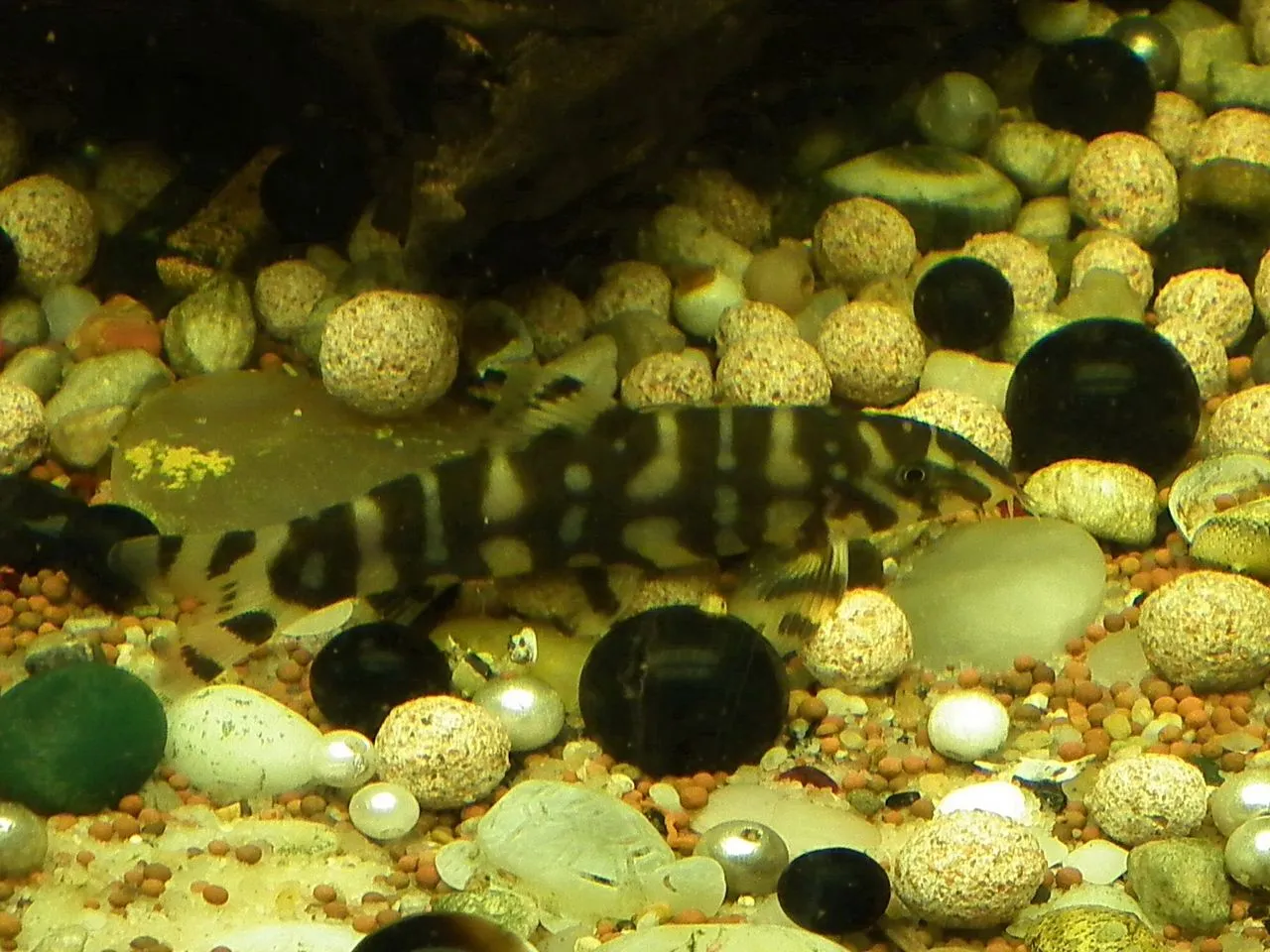
Answer: Clown loaches (Chromobotia macracanthus) are scaleless fish with a thin mucus layer, making Ichthyophthirius multifiliis theronts far easier to establish than on scaled species. Recurrent outbreaks usually trace to incomplete prior treatment — cysts left in the substrate seed new theront waves — or to chronic husbandry stressors: group size under five, temperature below 26 °C, or unquarantined newcomers suppressing immune function.
Chromobotia macracanthus gets ich repeatedly not through bad luck but through biology. It is a scaleless fish with a thin mucus layer — the two most important physical barriers against Ichthyophthirius multifiliis attachment. When the parasite's free-swimming theronts reach your tank, they settle on the easiest target, and clown loaches are always that target. Recurrent outbreaks mean one of two things: chronic husbandry stressors are suppressing immune function between every exposure, or the last treatment was incomplete and the substrate is still seeding new theront cohorts into the water column. Neither resolves on its own.
Part of the Complete Loaches Guide.
Main Causes
| Cause | Mechanism | What to check |
|---|---|---|
| Scaleless skin and thin mucus | Theronts penetrate epithelium faster; more establish per exposure | Loaches spot first and worst compared to scaled tankmates |
| Group size under five | Chronic social stress raises cortisol, suppressing immune response | Fish hiding solo, fin-clamping, subdominant fish not feeding |
| Temperature below 26 °C | Immune enzyme activity slows; parasite cyst survival on substrate extends | Test with a calibrated separate thermometer, not the heater dial |
| Daily temperature swings | Even 2 °C of daily fluctuation mimics sustained cold stress on immunity | Run a max-min thermometer for 48 hours |
| Incomplete prior treatment | Tomonts encysted in substrate released new theronts after treatment stopped | Outbreaks returning 7–14 days after apparent clearance |
| Unquarantined new arrivals | Carrier fish introduce low-level parasite load; loaches catch it first | Outbreaks that always follow a new addition |
| Sub-lethal medication dose | Under-dosing to protect scaleless fish leaves parasite survivors | Treatment appeared to work, then failed again the next cycle |
| Tankmate aggression | Chronic harassment elevates cortisol and suppresses immunity | Loaches hiding, not feeding, fin damage from nipping |
How to Identify the Problem
The useful distinction is between true recurrent ich and chronic susceptibility.
True recurrent ich means the parasite never left. Tomonts — the encysted intermediate stage — sit in substrate and on surfaces, releasing theront waves over days to weeks. Treatment that ends when visible white spots disappear will produce this result every time: the display looks clear for 7–10 days, then spots return as the next cohort emerges. This is not a new infection. It is the same infection continuing from the substrate.
Chronic susceptibility is different. The tank is genuinely clear between events. A new fish arrives without quarantine, and within 10 days the clown loaches are spotted while every other species looks fine. The loaches aren't uniquely unlucky — yoyo loaches and kuhli loaches present identically in the same situation, because any scaleless or lightly mucused loach offers far less resistance to theront attachment than a platy or danio carrying the same exposure.
If spotting appears without a new arrival, suspect a persistent substrate population from incomplete treatment. If spotting always follows a new addition, quarantine is the fix. In practice, many tanks have both problems at once.
One early sign worth knowing: clown loaches often scratch against rocks and wood before white spots are visible. Rubbing behaviour that precedes spotting is usually ich, not normal activity — treat it as an early warning.
Risk and Severity
Clown loaches die from ich faster than most community fish for two compounding reasons.
First, theronts establish more densely on scaleless skin, so a heavy trophont burden accumulates quickly. Second, trophonts on or near the gill surface impair gas exchange directly — the same mechanism that causes fish to gasp at the surface. A clown loach showing dense spotting on the body and operculum may be in respiratory distress within 24–48 hours, even while body movement still appears normal.
Secondary infection after ich clears is also common. Trophont feeding sites leave punctures in the epithelium that invite bacterial and fungal pathogens. Watch for ragged margins or reddened patches at healed ich sites in the weeks after treatment ends.
Fish in a correct social group recover faster. A clown loach in a group of five or more has lower baseline cortisol than a lone individual, which means a more functional immune response during the treatment period. A solitary clown loach fighting ich is fighting on two fronts simultaneously.
Solutions and Actions
Step 1: Check water parameters before anything else
Test ammonia, nitrite, and temperature first. Ich in poor water doubles mortality risk. If fish are gasping, showing clamped fins, or clustering near filter outlets, address oxygen and water quality immediately — then address the parasite.
Step 2: Choose the right treatment for scaleless fish
Heat-only protocol (preferred):
Raise temperature gradually — no faster than 1 °C every two hours — to 30–32 °C (86–90 °F). Increase surface aeration significantly at the same time; heat reduces dissolved oxygen and scaleless fish have no buffer against oxygen debt. Hold 30–32 °C for a minimum of 14 days from the disappearance of the last visible spot. At 30 °C the ich lifecycle completes in 3–5 days, so 14 days forces every encysted cohort through the vulnerable free-swimming stage. Return temperature gradually to 27–28 °C after treatment ends.
The full ich lifecycle and how heat exploits the vulnerable theront stage is covered in Ich White Spot Treatment — read it alongside this article.
Medication (when heat alone is insufficient):
Use malachite green or formalin at half the labelled dose. Do not use full-strength formalin or malachite green at the label dose — clown loaches are scaleless and standard doses are lethal. Copper-based treatments are not safe for loaches at any practical dose. Remove activated carbon from the filter before dosing and raise aeration throughout the course.
Salt is sometimes suggested, but clown loaches come from very low-conductivity soft water. Sustained elevated salinity adds a further stressor and is not recommended for this species.
Step 3: Complete the full course
Spots clearing from the body means trophonts have detached and dropped to the substrate — not that treatment has worked. For heat, hold 30–32 °C for 14 days from the last visible spot. For medication, run the full label duration, then add a further 7 days of elevated temperature as insurance. Do not cut either protocol short.
Step 4: Fix the underlying husbandry
Treatment without correcting root cause guarantees a repeat. Work through this list:
- Group size: minimum five clown loaches, eight or more is markedly better. The clown loach species profile covers the social dynamics and tank requirements in detail.
- Temperature: set to 27–28 °C and verify with a calibrated thermometer separate from the heater. Check both ends of the tank for cold pockets.
- New fish: quarantine every addition for four weeks before it contacts the display. Quarantine Tank Protocol and Acclimating New Fish cover the process.
- Aggression: identify and rehome persistent fin-nippers. Chronic social stress from harassment maintains the immune suppression that makes every pathogen more dangerous.
Prevention
Group size. A lone clown loach or a pair is a welfare problem before it becomes a disease problem. Minimum five; eight or more reduces the chronic stress load enough that immune function improves in practice.
Temperature stability. 27–28 °C long-term is the right target — warm enough for good immune function without pushing oxygen demand into a range that is difficult to maintain. Use a reliable heater and verify with a separate max-min thermometer. A dial set to 27 °C may deliver 24 °C in a cold room or 30 °C in summer. A cool pocket at the far end of the tank means poor heat treatment coverage even when the average reads correctly.
Quarantine. Every new fish, without exception, four weeks in a separate tank at matching temperature and water chemistry. Ich presents within that window under the stress of a new environment. A new fish added directly to a display containing clown loaches is the most reliable single way to produce an outbreak.
Tankmate selection. Avoid species that nip or patrol the bottom aggressively. Tiger barbs, many cichlids, and large barbs frequently harass loaches. The resulting chronic stress is immune suppression in slow motion.
Common Mistakes
- Stopping treatment when spots clear. The most common cause of recurrent ich. Spots clearing means trophonts have dropped to the substrate, not that the parasite is dead. The tank must complete the full heat or medication cycle even when the fish look completely healthy.
- Using full-strength medication. Standard formalin or malachite green doses calculated for scaled fish can kill clown loaches. Half-dose is the maximum safe starting point for scaleless species. Copper treatments are not safe for loaches at any practical dose.
- Keeping a lone clown loach or a pair. A solitary clown loach has elevated cortisol regardless of how well everything else in the tank is managed. Social isolation is immune suppression. This fish needs a group to function normally.
- Treating without increasing aeration. Elevated temperature reduces dissolved oxygen. Medications stress gill epithelium. Without additional aeration — an airstone, a sponge filter, a powerhead aimed at the surface — the treatment itself causes breathing distress in scaleless fish with no mucus buffer.
- Trusting the heater dial. Cheap heaters drift significantly. Verify temperature with a separate thermometer at two points in the tank — near the heater and at the opposite end. Clown loaches sitting in a cool pocket will not benefit from heat treatment even when the average reading looks correct.
FAQ
Can I use standard ich medication on clown loaches?
Half the labelled dose only. Clown loaches lack the scale and mucus barrier that protects scaled fish from formalin and malachite green. Full-strength doses damage gills and can kill the fish. The heat-only protocol at 30–32 °C for 14 days is safer and equally effective when applied correctly. Copper treatments are not safe for loaches at any practical dose.
How quickly does ich spread in a clown loach tank?
Faster than most communities. A single trophont dropping off can release up to 1,000 theronts. At 28 °C the full cycle completes in 3–5 days. Because clown loaches are scaleless, multiple theronts establish on the same fish simultaneously, and visible spotting can progress from mild to severe within 48 hours.
Why did my clown loach's spots clear up, then come back a week later?
Spots clearing means trophonts have detached and dropped to the substrate as tomonts — not that the parasite is gone. The treatable free-swimming theront stage comes days later. Treatment stopped at the point spots clear almost always leaves the next theront cohort untouched, producing what looks like a new outbreak but is the same infestation continuing.
What temperature do clown loaches need?
27–30 °C, consistently. Below 26 °C, immune enzyme activity slows in ectotherms and parasite cyst survival on the substrate extends, compounding vulnerability. Daily swings of 2 °C or more from a poorly calibrated heater cause the same immune suppression as sustained cold, without the obvious diagnostic signal of a low temperature reading.
Do I need to treat the whole tank or just the loaches?
The whole tank. Ich theronts are free-swimming and will attach to any available host. If you move the loaches to a hospital tank, the display must still complete the full heat or medication cycle — substrate and all — or the parasite population persists in the main aquarium and re-infects the loaches on return.
Sources
- Noga, E.J. (2010). Fish Disease: Diagnosis and Treatment. Wiley-Blackwell.
- Stoskopf, M.K. (1993). Fish Medicine. W.B. Saunders.
- Kottelat, M. (2012). Conspectus Cobitidum: an inventory of the loaches of the world. The Raffles Bulletin of Zoology, Supplement 26.
- FishBase — Chromobotia macracanthus species account. https://www.fishbase.se/
Frequently Asked Questions
Can I use standard ich medication on clown loaches?
Half the labelled dose only. Clown loaches lack the scale and mucus barrier that protects scaled fish from formalin and malachite green. Full-strength doses damage gills and can kill the fish. The heat-only protocol at 30–32 °C for 14 days is safer and equally effective when applied correctly. Copper treatments are not safe for loaches at any practical dose.
How quickly does ich spread in a clown loach tank?
Faster than most communities. A single trophont dropping off can release up to 1,000 theronts. At 28 °C the full cycle completes in 3–5 days. Because clown loaches are scaleless, multiple theronts establish on the same fish simultaneously, and visible spotting can progress from mild to severe within 48 hours.
Why did my clown loach's spots clear up, then come back a week later?
Spots clearing means trophonts have detached and dropped to the substrate as tomonts — not that the parasite is gone. The treatable free-swimming theront stage comes days later. Treatment stopped at the point spots clear almost always leaves the next theront cohort untouched, producing what looks like a new outbreak but is the same infestation continuing.
What temperature do clown loaches need?
27–30 °C, consistently. Below 26 °C, immune enzyme activity slows in ectotherms and parasite cyst survival on the substrate extends. Daily swings of 2 °C or more from a poorly calibrated heater cause the same immune suppression as sustained cold.
Do I need to treat the whole tank or just the loaches?
The whole tank. Ich theronts are free-swimming and will attach to any available host. If you move the loaches to a hospital tank, the display must still complete the full heat or medication cycle — substrate and all — or the parasite population persists and re-infects the loaches on return.
Sources & References
- Noga, E.J. (2010). Fish Disease: Diagnosis and Treatment. Wiley-Blackwell.
- Stoskopf, M.K. (1993). Fish Medicine. W.B. Saunders.
- Kottelat, M. (2012). Conspectus Cobitidum: an inventory of the loaches of the world. The Raffles Bulletin of Zoology, Supplement 26.
- FishBase — Chromobotia macracanthus species account. https://www.fishbase.se/