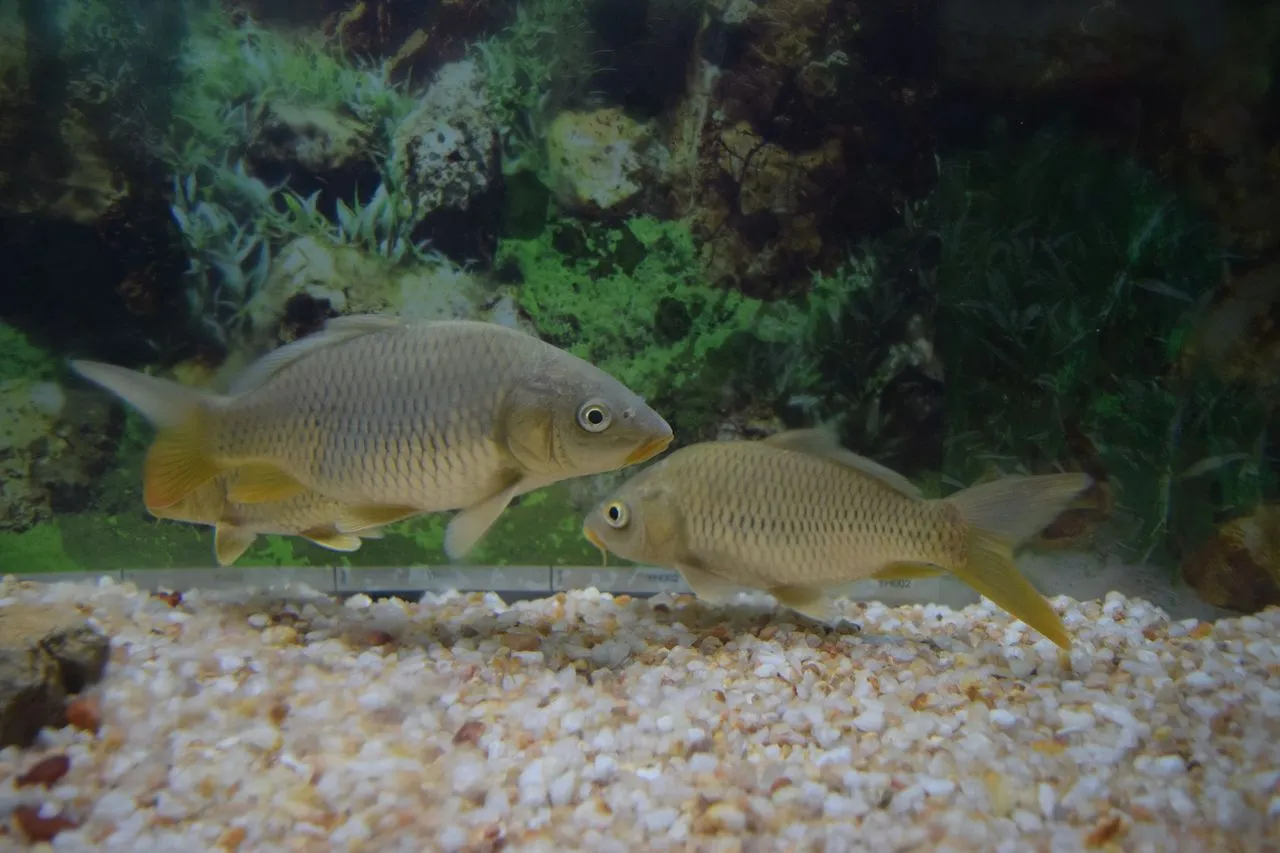
Answer: Fish scratching against decor, substrate, or plants — called flashing or glancing — signals irritation at the skin or gills. The two root causes are ectoparasites (ich, gill flukes, velvet, Trichodina) and water-chemistry insults (ammonia, chloramine, pH shock). Identifying which requires examining accompanying signs, which species are affected first, recent tank events, and a water test before any medication is added.
Fish scratching against decor, substrate, or plants — dipping sideways, rolling briefly, or driving a flank across a piece of driftwood — is a reflex called flashing or glancing. It signals irritation at the skin or gill surface, and the cause is nearly always one of two things: an ectoparasite working through the mucous coat, or a water-chemistry insult burning gill epithelium. The two can look identical in the first hour, which is why a test kit must come out before a medication does.
Part of the Complete Aquarium Care Guide.
Main Causes
| Cause | Accompanying signs | Speed of onset |
|---|---|---|
| Ichthyophthirius multifiliis (ich) | White salt-grain cysts visible within 24–48 h | Gradual over days |
| Gill flukes (Dactylogyrus, Gyrodactylus) | No visible spots; laboured breathing, excess mucus | Hours to days |
| Skin flukes (Gyrodactylus spp.) | Skin cloudiness, tissue erosion under heavy load | Days |
| Velvet (Oodinium/Piscinoodinium) | Gold-dust sheen under angled torch light; rapid breathing | Days |
| Trichodina spp. | Skin cloudiness, spinning behaviour in severe cases | Days to weeks |
| Costia (Ichthyobodo necator) | Bluish-grey film on skin; reduced appetite | Days |
| Ammonia or nitrite toxicity | Whole tank affected simultaneously; test confirms | Hours following spike |
| pH or temperature shock | Whole tank affected; recent water change or heater fault | Minutes to hours |
| Chloramine (failed dechlorination) | All fish flashing immediately post-water change | Minutes |
| Excess copper or formalin | Scaleless species affected before scaled fish | Minutes to hours |
A single flash against bogwood after feeding is not an emergency — fish occasionally rub the jaw region on hard surfaces, and a healthy specimen does it rarely and briefly. Repeated, sustained flashing — the same fish multiple times per minute, or several fish simultaneously — is diagnostic.
How to Identify the Problem
Work through these in order. Each step narrows the cause substantially.
- Test ammonia, nitrite, and pH immediately. Detectable ammonia above 0.25 ppm or nitrite above 0.1 ppm is sufficient to cause flashing without any parasite present. A pH shift of more than 0.5 units after a water change is equally suspect.
- Did flashing begin within minutes of a water change? Suspect chloramine or temperature shock. Dechlorinate with a product rated for chloramine — sodium thiosulphate alone does not break the chloramine bond. Test for ammonia afterwards, as chloramine releases free ammonia on neutralisation.
- Is the whole tank flashing at once? Water chemistry is the more likely cause. A single ectoparasite species rarely infects every fish simultaneously — parasite-driven flashing typically begins in one or two fish and spreads over days.
- Are scaleless species — kuhli loaches, clown loaches, otocinclus, glass catfish, bronze corydoras — flashing before scaled tankmates? Both ectoparasites and chemical irritants affect thin-skinned fish disproportionately. This pattern points toward parasite or early chemical exposure rather than acute ammonia toxicity, which tends to be non-selective across the tank.
- Check for white spots under bright light. Pinhead-sized raised white cysts on the body, fins, or gills indicate ich. Treatment protocol, species tolerance, heat and salt options, and medication dosing are all covered in Ich White Spot Treatment.
- Shine a torch at a low angle across the flanks. A fine gold or rust-coloured dust — visible only under angled light, not in ambient room lighting — is characteristic of velvet (Oodinium/Piscinoodinium). Velvet is more virulent than ich in most freshwater species and warrants faster intervention.
- No white spots, no water-quality signal, continued flashing — especially with laboured breathing? Gill flukes are the working diagnosis. Dactylogyrus is predominantly egg-laying and gill-specific; Gyrodactylus is live-bearing and attacks skin first before spreading to the gills. Both arrive on unquarantined fish. See Quarantine Tank Protocol.
Risk and Severity
The risk depends on the pathogen or insult involved, the species affected, and how long the symptom runs before treatment.
Gill flukes cause the most silent damage. By the time a keeper notices flashing, the parasite may already have compromised enough gill lamellae to impair gas exchange meaningfully. Fish that carry a heavy, untreated fluke burden often develop secondary bacterial infections at the damaged gill tissue — infections that are harder to treat than the original parasite.
Scaleless and thin-skinned species function as early-warning indicators for the whole tank. Kuhli loaches, clown loaches, and glass catfish will show symptoms — and die — before most scaled tankmates appear distressed. If these animals are flashing in a community tank, the parasite load on the scaled fish is likely already significant even where those fish look outwardly normal.
Chemical insults — ammonia, chloramine, pH shock — are acute but reversible if corrected quickly. Chronic low-level ammonia exposure at 0.25–1.0 ppm over several days scars gill epithelium and permanently reduces gas-exchange efficiency. Fish recovering from ammonia damage are markedly more susceptible to gill parasites and respiratory distress during any subsequent stress event.
Velvet (Oodinium) demands the fastest response of all common freshwater ectoparasites. A moderate infection can kill a small-bodied species within a week; a severe outbreak in a nano tank moves faster still.
Solutions and Actions
Step 1: Test water before anything else. Measure ammonia, nitrite, and pH before adding any medication. Treating a parasite in a tank already reading 0.5 ppm ammonia places two stressors on fish already under physiological pressure. If water quality is compromised, perform a 25–40% water change with temperature-matched, fully dechlorinated water before proceeding with any treatment.
Step 2: Identify the pathogen, then match the active ingredient.
| Pathogen | Effective active ingredient(s) | Notes |
|---|---|---|
| Ichthyophthirius (ich) | Heat (30 °C for tolerant species), NaCl (1–3 g/L), malachite green | Full protocol in Ich White Spot Treatment |
| Gill and skin flukes | Praziquantel | 2–5 mg/L; repeat dose at 5–7 days to catch newly hatched larvae |
| Velvet (Oodinium) | Copper sulphate, formalin | Darken the tank; copper is lethal to invertebrates at therapeutic doses |
| Trichodina | NaCl bath (2–3 g/L) or formalin | Short-term salt baths effective for mild to moderate infestations |
| Costia/Ichthyobodo | Formalin, potassium permanganate | Remove activated carbon from filter during treatment |
Step 3: Treat the whole tank, not just the symptomatic fish. Subclinical infection is the norm with ectoparasites — most fish in a tank carry a parasite burden below the threshold of visible flashing even when one or two individuals are clearly affected. Spot-treating individual fish does not break the infection cycle in the display.
Step 4: Protect sensitive species during treatment. Copper-based treatments are lethal to all invertebrates at therapeutic doses and damaging to loaches, corydoras, and other scaleless fish. If the tank contains shrimp, snails, or thin-skinned catfish, use a copper-free protocol or move sensitive animals to a quarantine tank for the duration of treatment.
Prevention
- Quarantine all new arrivals. A four-week quarantine in a separate tank is sufficient to reveal gill flukes, ich, and velvet before they reach the display. See Quarantine Tank Protocol. Every ectoparasite outbreak I have investigated in a stable, mature tank traced to a single unquarantined introduction.
- Drip-acclimate new fish. pH and osmotic shock can cause immediate flashing in fish removed from a bag or transport container with different water parameters. Read Acclimating New Fish before introducing any new livestock.
- Use a dechlorinator rated for chloramine. Chloramine is now the standard municipal water disinfectant across most of the UK and North America. Sodium thiosulphate-only products neutralise free chlorine but leave chloramine intact. Check the product label before every water change.
- Test source water after seasonal changes. Municipal water chemistry shifts seasonally and after heavy rainfall. A water change that was safe in February may carry a meaningfully different pH or mineral content in May.
- Maintain parameter stability over parameter perfection. Consistent GH, KH, and temperature prevent the osmotic and epithelial stress that leaves fish susceptible to opportunistic ectoparasites. The biological foundation for that stability is covered in Nitrogen Cycle Explained.
Common Mistakes
- Reaching for medication before testing the water. The most common error, and often the most damaging — medication in ammonia-spiked water stresses fish in physiological distress faster than most parasites would.
- Treating ich with salt alone in a tank containing loaches or corydoras. NaCl at the doses effective against ich (2–3 g/L) is poorly tolerated by kuhli loaches, clown loaches, and corydoras. Use a heat protocol or a copper-free medication for tanks with sensitive species.
- Stopping treatment early because flashing has ceased. Praziquantel requires a second dose at 5–7 days to kill flukes that hatched after the initial treatment. Stopping at day three leaves the tank re-infested within a week.
- Assuming all flashing is disease. A healthy fish rubbing its jaw on bogwood after eating is performing normal mouth-cleaning behaviour. Context matters — isolated, brief, in a single fish, immediately post-feed is not a diagnostic event.
- Using copper in a tank with invertebrates or scaleless catfish. Copper is lethal to all invertebrates at therapeutic doses and damages gill epithelium in loaches and otocinclus. Where copper-sensitive animals are present, choose praziquantel for flukes and a copper-free ich treatment.
Frequently Asked Questions
Is a single fish flashing once or twice actually a problem?
Not necessarily. A healthy fish occasionally rubs its jaw on bogwood or driftwood after feeding — brief, infrequent, isolated to one fish — and this is not diagnostic. The concern is repeated flashing over minutes, multiple fish involved, or flashing combined with any other sign: spots, laboured breathing, clamped fins, or loss of appetite.
Why did flashing start right after a water change?
Chloramine, temperature shock, or a pH shift are the most common causes. Chloramine — now the standard disinfectant in most UK and North American municipal supplies — is not neutralised by sodium thiosulphate-only dechlorinators. Use a product explicitly rated for chloramine. A pH difference of more than 0.5 units between old and new water can cause immediate irritation even with otherwise clean source water.
How do I tell gill flukes from ich at the start?
Timing and visible signs are the key separators. Ich produces white salt-grain cysts on the body within 24–48 hours of the first flash; gill flukes produce no visible spots and are instead accompanied by rapid breathing, excess surface mucus, and — in heavier infestations — gasping. If the fish is flashing hard with no white spots after 48 hours, flukes are the working diagnosis until ruled out.
Are scaleless fish at greater risk from ectoparasites?
Yes. Kuhli loaches, clown loaches, otocinclus, glass catfish, and corydoras lack the physical barrier that scales provide. They absorb both parasites and chemical treatments more readily than scaled fish. A scaleless fish flashing before scaled tankmates show symptoms is an early-warning signal for the whole tank, not just for that species.
Sources & References
- Noga, E.J. (2010). Fish Disease: Diagnosis and Treatment. Wiley-Blackwell.
- Stoskopf, M.K. (1993). Fish Medicine. W.B. Saunders.
- Hovanec, T.A. & DeLong, E.F. (1996). Comparative analysis of nitrifying bacteria associated with freshwater and marine aquaria. Applied and Environmental Microbiology, 62(8): 2888–2896.
- <a href='https://www.fishbase.se/'>FishBase</a> — species notes and ectoparasite distribution records.