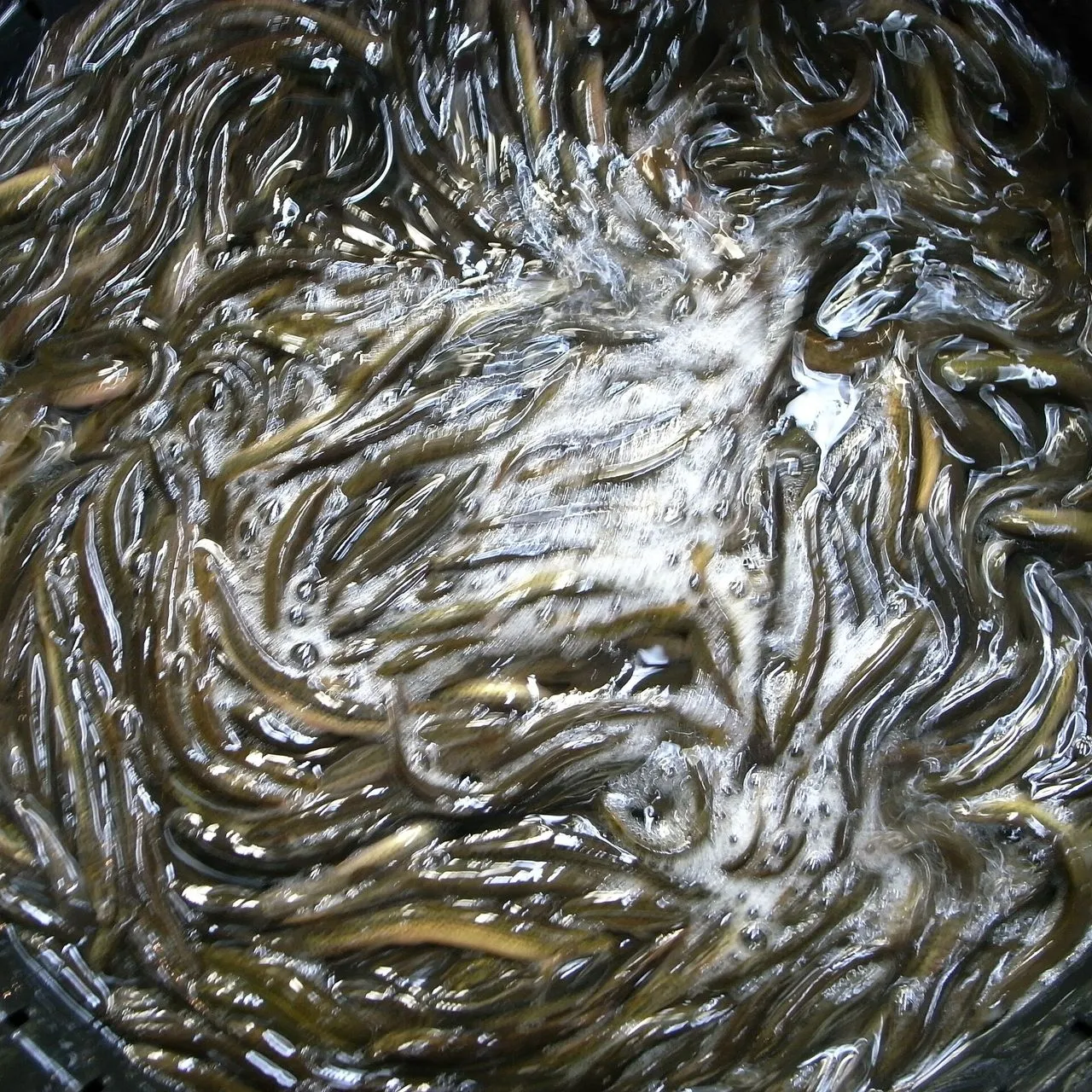
Answer: Weather loaches are cool-water bottom fish that can reach 8–11 inches or more. Keep them in a long, covered aquarium with soft sand, steady oxygen, and cooler water than most tropical fish prefer. Test ammonia and nitrite if they gasp, jump, or act frantic.
Misgurnus anguillicaudatus is the weather loach, an aquarium loach reaching 20–28 cm and associated in nature with East Asian slow rivers, rice fields, ditches, and floodplain pools. Its care is straightforward only when the aquarium is built around adult size, substrate, social structure, and oxygen rather than around the idea that all loaches are generic bottom fish.
Part of the Complete Loaches Guide.
Identification
Healthy weather loach are identified first by body shape and behaviour. The adult size is 20–28 cm; juveniles may look harmless in dealer tanks, but the adult footprint and group requirement decide the aquarium. The mouth is directed downward or forward-low, with barbels used to test the feeding surface. Air gulping is normal accessory respiration; frantic surfacing is not.
| Character | What to look for | Why it matters |
|---|---|---|
| Adult size | 20–28 cm | Tank plans should use adult dimensions, not sale size |
| Substrate use | soft sand or silt-like rounded material for digging | Barbel health and normal feeding depend on the surface |
| Social pattern | three or more if space permits | Solitary fish often show stress or abnormal aggression |
| Handling | Use containers or coarse nets for spined botiids; avoid chasing any loach through fine mesh | Loaches abrade easily and many botiids have suborbital spines |
Sexing is usually unreliable outside breeding condition. Mature females often become deeper-bodied when well fed, but this is not a safe method for buying pairs. Colour also changes with stress, age, diet, and lighting, so body form and provenance are better guides than intensity.
Origin & Habitat
This species is recorded from East Asian slow rivers, rice fields, ditches, and floodplain pools. That habitat should be translated into aquarium structure, not copied as decoration. The useful aquarium target is 10–22 °C, GH 4–18 °dH, KH 2–10 °dH, pH 6.5–8.0, and conductivity around 150–650 µS/cm. These numbers sit inside a larger natural range, but they give a reproducible starting point for long-term care.
Water quality should be stricter than the broad pH range suggests. Ammonia and nitrite must remain 0 mg/L. Nitrate should stay below 20 mg/L, with 5–10 mg/L preferable in cool, high-flow systems. If hardness and alkalinity terms are still unclear, read water hardness: GH and KH explained before altering tap water.
Aquarium Husbandry
Provide 250 litres with a secure lid; outdoor ponds only where legal. Use soft sand or silt-like rounded material for digging, then add cover so the fish can choose between exposed feeding lanes and retreat. Smooth stones, wood, leaf litter, rhizome plants, and shaded caves are all useful when they match the species' natural structure. A mature biological filter is non-negotiable; loaches feed close to the surface where waste collects, so unstable cycling damages them early. Cycling a new aquarium is required reading before adding any loach to a fresh tank.
| Parameter | Target |
|---|---|
| Temperature | 10–22 °C |
| GH | 4–18 °dH |
| KH | 2–10 °dH |
| pH | 6.5–8.0 |
| Conductivity | 150–650 µS/cm |
| Minimum social unit | three or more if space permits |
The best planting is tough and rooted or attached out of the main digging line. Java fern, anubias nana, and established cryptocoryne wendtii all work in many loach aquaria. Delicate stems in loose gravel are a poor match for digging, chasing, or high current.
Tankmates & Behaviour
The weather loach is cool-water, tactile, and famous for agitation before pressure changes. Keep three or more if space permits. This point is not ornamental advice; it determines feeding confidence, aggression distribution, and disease resistance. Single social loaches may survive for years while never behaving normally.
Good tankmates share temperature, oxygen demand, and temperament. Quiet soft-water loaches can live with cardinal tetra, rummynose tetra, honey gourami, or pearl gourami where current and temperature match. More boisterous botiids need faster, robust fish and should not be placed with slow long-finned species. Bottom-feeder comparisons with bronze corydoras, sterbai corydoras, and bristlenose pleco are useful, but do not crowd the same floor area with too many competing species.
Diet
In captivity feed worms, insect larvae, sinking omnivore foods, and vegetable matter. Food must reach the bottom in good condition. In community tanks, mid-water fish often intercept everything before loaches feed; after-dark feeding and multiple feeding points prevent thin bellies. Remove uneaten food within a few hours because decay in sand or stone crevices produces bacterial load exactly where loaches probe.
Snails, if eaten, should be considered enrichment rather than a job. A loach bought only to control snails becomes a welfare problem when the snail population falls or the fish outgrows the tank. Correct overfeeding first.
Breeding
Home breeding is uncommon for many traded loaches and poorly documented for some imports. Conditioning requires stable water, heavy feeding with invertebrate foods, seasonal water changes, and secure spawning cover. Eggs, when produced, are usually vulnerable to adult predation. Commercial production may rely on outdoor ponds or hormone induction for several botiids, which is why regular shop availability does not mean easy aquarium breeding.
The practical breeding advice is conservative: maintain a mature group, feed varied foods, and record temperature, conductivity, and water-change patterns if spawning behaviour appears. Do not buy presumed pairs from a tray of juveniles; sexing is too uncertain.
Common Problems
The main failure is keeping it as a tropical community fish at 26–28 °C. Secondary failures include adding loaches before the filter is mature, keeping social species alone, using abrasive gravel, and treating them as scavengers. Quarantine new imports for two to four weeks; see the quarantine tank protocol. Watch for pinched bellies, clamped fins, rapid breathing, white patches on barbels, and refusal to feed after the first week.
Medication deserves care. Scaleless or lightly scaled fishes, and bottom dwellers exposed to compounds settling in mulm, can react badly to harsh treatments. Identify the disease before medicating, raise aeration, and avoid guesswork.
See Also
- The Complete Loaches Guide — taxonomy, family-level care, and handling cautions.
- Kuhli Loach — useful sibling comparison.
- Horse Face Loach — related loach with different husbandry emphasis.
- Hillstream Loach — another loach often considered by the same aquarists.
- Substrate Selection — sand, stone, and bottom-feeder safety.
- The Complete Catfish Guide — comparison with true catfish substrate feeders.
Quick answer: how big do weather loaches get?
Weather loaches, also called dojo loaches, commonly reach 8 to 10 inches and can grow larger in roomy aquariums or ponds. Plan for a long, covered tank with soft sand, cool oxygen-rich water, and plenty of floor space rather than a small tropical community setup.
Temperature is the care detail people miss
Weather loaches are cool-water fish, not typical warm tropicals. Keep the tank stable and verify the actual water temperature with a digital freshwater aquarium thermometer; prolonged warmth speeds stress, reduces oxygen, and can shorten lifespan. A tight lid also matters because active loaches can push through small openings.
As an Amazon Associate, we earn from qualifying purchases, at no extra cost to you.
Weather loach size and tank footprint
The common mistake is buying weather loaches as small, pencil-thin juveniles and planning around that size. Adults are heavy, active fish. A long tank matters more than height because they cruise the bottom, dig, and wedge under decor. If the tank looks crowded before the fish is full grown, it is already too small.
Test the tank before making stocking changes. A liquid kit such as the API Freshwater Master Test Kit search helps confirm ammonia and nitrite are zero before you add more bottom-dwelling fish. As an Amazon Associate, we earn from qualifying purchases, at no extra cost to you.
Quick checks before buying one
- Check local rules first. Weather loaches are restricted or invasive in some regions.
- Use smooth sand or rounded fine gravel; sharp substrate damages barbels.
- Cover every lid gap, including filter cutouts and cable slots.
Quick answer: what weather loaches need
Weather loaches are not small tropical cleanup fish. They need floor space, cool water, a soft bottom, and a lid that blocks even narrow gaps. If the tank is warm, dirty, or poorly oxygenated, they often become restless before other fish show obvious stress.
Check water before blaming weather changes
Weather loaches do react to pressure shifts, but frantic swimming or surface gulping can also point to ammonia, nitrite, or low oxygen. Keep a liquid kit such as the API Freshwater Master Test Kit on hand so you can rule out water problems before changing the setup.
As an Amazon Associate, we earn from qualifying purchases, at no extra cost to you.
Frequently Asked Questions
What temperature is best for weather loaches?
Most weather loaches do best in cool, well-oxygenated water around 18–22°C (64–72°F). They are not a good match for consistently warm tropical community tanks.
How big do weather loaches get?
Many reach 8–11 inches, and some grow larger. Plan for a long tank with open floor space, soft substrate, and secure cover.
Do weather loaches jump?
Yes. They are active, strong fish that may jump or push through gaps, especially during weather changes, stress, or poor water quality.
Sources & References
- Kottelat, M. (2012). Conspectus Cobitidum: an inventory of the loaches of the world. The Raffles Bulletin of Zoology, Supplement 26.
- FishBase — Cobitoidea and species accounts. https://www.fishbase.se/
- Fricke, R., Eschmeyer, W.N. & Van der Laan, R. Catalog of Fishes. California Academy of Sciences.
- Freyhof, J. & Kottelat, M. (2008). Misgurnus anguillicaudatus conservation and invasion assessments in European waters.