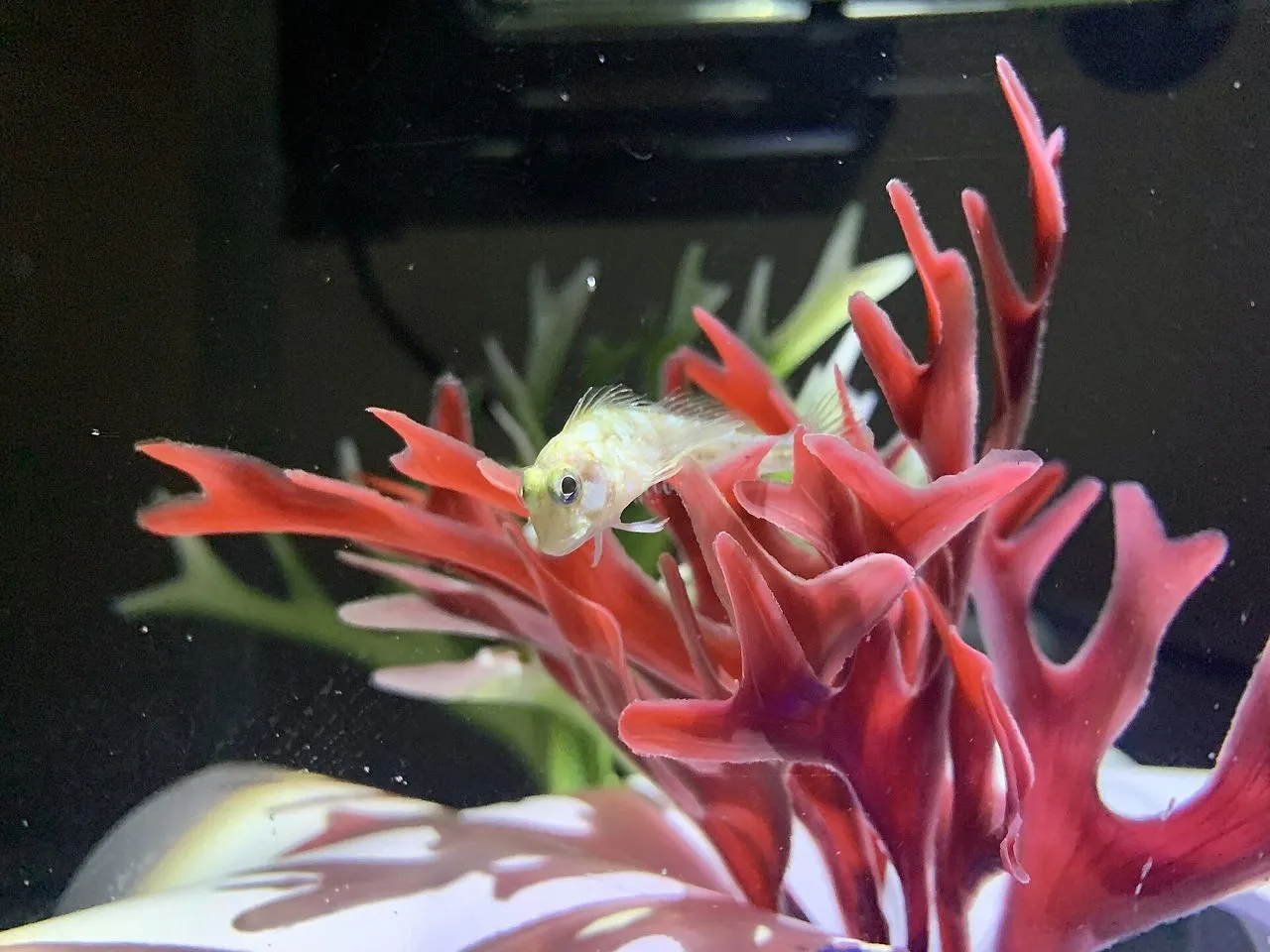
Answer: A fish swimming sideways is not always an emergency — but it can be. Dietary swim bladder disorder in a fancy goldfish or betta is often treatable with fasting and a diet change. The same symptom in a previously healthy fish with no recent heavy feeding, or in multiple fish at once, points to ammonia poisoning, bacterial septicaemia, or neurological collapse — conditions that can kill within hours.
Swimming sideways spans a wide spectrum of severity. At one end is the fancy goldfish that rolled over after several days of dry-flake overfeeding — unpleasant for the fish, but often reversible with a fast and a diet correction. At the other is the neurological collapse of a fish in its final hours: involuntary, progressive, unresponsive to any intervention. The symptom looks similar; the underlying cause determines whether treatment is possible at all, and triage requires distinguishing the two before reaching for anything.
Part of the Complete Aquarium Care Guide.
Main Causes
| Cause | Mechanism | Typical signal |
|---|---|---|
| Dietary swim bladder disorder | Constipation or gut distension compresses the swim bladder | Floating at surface, head-up posture; recent heavy feeding or dry-food staple diet |
| Genetic or structural deformity | Round, compressed body (fancy goldfish, balloon mollies, balloon rams) leaves no room for normal swim bladder function | Chronic or intermittent tilt; fish otherwise active and eating |
| Ammonia or nitrite poisoning | Impairs blood gas exchange; unionised ammonia is directly neurotoxic at concentrations above 0.25 mg/L | Multiple fish affected simultaneously; new or recently disturbed tank |
| Bacterial infection | Systemic Aeromonas or Streptococcus causes organ enlargement, septicaemia, or — in the case of Streptococcus — direct neurological invasion (Noga, 2010) | Rapid onset; often with dropsy, haemorrhage, or spiralling behaviour |
| Gill parasites (flukes) | One-sided gill failure creates asymmetric respiratory resistance, producing a persistent tilt | Scratching or flashing behaviour alongside the tilt; visible respiratory distress |
| Internal organ enlargement | Kidney cysts, liver lipidosis, or egg binding displace the swim bladder | Mature fish, often with prior abdominal swelling |
| Trauma | Powerhead strike, jump-and-re-entry, or rough netting damages the swim bladder directly | Sudden onset in an otherwise healthy fish with no preceding signs |
| Terminal neurological decline | End-of-life CNS collapse — irreversible | Progressive; fish unresponsive and no longer eating |
Several of these co-occur. An overfed fish in a tank with elevated ammonia can present symptoms indistinguishable from pure dietary swim bladder disorder (SBD), but the ammonia component means fasting alone will not be sufficient.
How to Identify the Problem
The presentation pattern narrows the diagnosis before you run a single test.
Floating sideways at the surface (positive buoyancy) — the body is being pushed upward, not tilted by muscle failure. The fish may roll partly dorsal-side up, and exposed skin is at risk of desiccation and secondary infection. This is the classic presentation of dietary SBD in fancy goldfish and bettas — dry food, floating pellets that expand in the gut, or sustained overfeeding. It is also how gas supersaturation presents, though that is uncommon in standard home aquaria.
Lying on one flank on the substrate (complete loss of equilibrium) — the most severe presentation. The fish cannot right itself and may barely react to stimuli. Test ammonia and nitrite immediately. If readings are elevated, this is an ammonia emergency. If parameters are clean, consider systemic bacterial infection or neurological collapse. See Why Are My Fish Gasping at the Surface for the parallel triage on acute water quality failure.
Persistent tilt at an abnormal angle (head-down or head-up) — the fish swims but holds a fixed orientation, typically 30–45° from horizontal. One-sided gill fluke infestation is a common cause; Streptococcus infection reaching the inner ear or labyrinth produces an indistinguishable picture. Dwarf Gourami Iridovirus causes a similar head-down posture as spleen enlargement displaces the body.
Intermittent rolling during rapid movement — the fish rights itself at rest but loses balance when startled or swimming hard. This suggests early-stage SBD or a structural deformity rather than acute toxicity, and it is the least urgent presentation — though it still warrants a water test and diet review.
Test ammonia, nitrite, pH, and KH regardless of presentation type. A pH crash can release previously bound ammonia and produce buoyancy symptoms without the ammonia spike you might expect.
Risk and Severity
| Presentation | Urgency | Priority action |
|---|---|---|
| Multiple fish affected simultaneously | Emergency | Test ammonia and nitrite within minutes; water change |
| Single fish, complete loss of equilibrium | High | Test water; isolate the fish immediately |
| Persistent tilt with respiratory signs | High | Rule out gill flukes; test water quality |
| Floating at surface after recent heavy feeding | Moderate | Fast for 48–72 hours; monitor |
| Intermittent rolling in a stable, mature tank | Low | Diet review; observe for 5–7 days |
| Structural deformity in a fancy-bred strain | Chronic | Management only — no cure exists |
Fish that survive an acute episode carry lasting risk. Gill and CNS damage from ammonia exposure is cumulative; recovered fish are more susceptible to secondary bacterial infection. Read Bacterial vs Fungal Disease and Fin Rot Diagnosis for the signs that indicate a secondary infection is developing.
Neon tetras and other soft-water schooling fish are particularly vulnerable to water quality-driven buoyancy loss — their tolerance thresholds are narrow, and equilibrium failure often precedes visible gill symptoms by hours.
Solutions and Actions
Work through these in order. Do not skip the water test.
- Test water parameters immediately. Ammonia, nitrite, pH, KH, and temperature. If ammonia exceeds 0.25 mg/L or nitrite exceeds 0.1 mg/L, perform a 30–50% water change with temperature-matched, dechlorinated water and re-test 4–6 hours later. See Nitrogen Cycle Explained.
- Fast the fish for 48–72 hours. If parameters are within range and the fish was recently fed, withhold all food. This is the most effective first intervention for dietary SBD and should precede everything else in non-emergency cases. A fast will not fix a genetic, bacterial, or ammonia-driven case — but it confirms or eliminates dietary cause quickly.
- Epsom salt bath for persistent constipation. If fasting alone does not resolve positive buoyancy within 72 hours, an Epsom salt (magnesium sulphate) bath — 1 tablespoon per 4 litres of tank water in a separate container, for 15–30 minutes — acts as a mild osmotic laxative. Do not add Epsom salt directly to the display tank; it alters water chemistry for all inhabitants and has no proven benefit at tank-wide dilutions.
- Switch to sinking, varied foods after fasting. Offer frozen bloodworm, brine shrimp, or daphnia rather than dry flakes or floating pellets. For goldfish and herbivorous species, blanched courgette or shelled peas support gut motility — not because peas have medicinal properties, but because their fibre content helps where dietary roughage has been absent.
- Isolate if systemic infection is suspected. Dropsy, haemorrhage at fin bases, protruding scales, or spiralling behaviour alongside buoyancy loss indicates bacterial septicaemia. Move the fish to a quarantine tank before attempting any medication. Broad-spectrum antibiotics without a confirmed bacterial diagnosis can disrupt the biofilter without resolving the underlying cause.
- Treat for gill flukes if tilting with respiratory distress. Praziquantel, dosed per the product label, is the standard treatment for trematode infections. Treat the whole tank — flukes spread through the water column, and affected fish are rarely the only ones carrying them.
Prevention
- Feed sinking or neutrally buoyant foods as the staple. Floating flakes and pellets that expand in the gut are the most avoidable cause of dietary SBD. Rotating in frozen or live foods — bloodworm, brine shrimp, daphnia — at least twice a week reduces the risk substantially.
- Feed conservatively. Once daily, with only what fish consume in 2–3 minutes, prevents the gut distension that compresses the swim bladder and reduces the organic load reaching the biofilter.
- Maintain water quality through a proper cycle. Ammonia-driven buoyancy loss is entirely preventable. See Cycling a New Aquarium for the full procedure. Weekly water tests take five minutes and catch parameter drift before it produces visible symptoms.
- Consider species selection carefully. Siamese fighting fish in long-finned fancy forms and balloon mollies — bred specifically for a dorsally compressed body — carry structural SBD risk by design; balloon mollies in particular raise legitimate welfare concerns about deliberate deformity breeding. Oscar cichlids develop dietary SBD readily when kept on a monotonous high-protein pellet diet. Wild-type body forms carry far lower inherent risk across all species.
- Quarantine every new arrival. Parasitic and bacterial diseases that cause buoyancy loss enter established tanks through unquarantined additions. A minimum two-week quarantine period is the single most effective disease-prevention step available to the home aquarist.
Common Mistakes
- Treating genetic SBD with dietary interventions. A balloon molly with a structurally compressed coelom is not constipated — it is anatomically deformed. Fasting and diet changes will not alter its skeletal structure or swim bladder geometry.
- Using proprietary "swim bladder treatments". Commercial products sold specifically for this condition have no consistent evidence of efficacy. If the cause is dietary, a fast will resolve it. If it is bacterial, an over-the-counter product will not, and the appropriate response is targeted antibiotic therapy under veterinary guidance.
- Assuming single-fish SBD when multiple fish are affected. Dietary or genetic SBD presents in individual fish. Two or more fish losing equilibrium simultaneously almost always indicates water quality failure — test before treating.
- Delaying the water test while trialling home remedies. Ammonia-driven buoyancy loss is an emergency. Every hour without a water change or ammonia binder compounds gill and CNS damage that does not fully reverse even after parameters are corrected.
- Continuing to feed a tilted fish on its normal schedule. Each feeding increases gut content, raises ammonia, and adds physical pressure to the swim bladder — the opposite of what recovery requires.
Frequently Asked Questions
Is a fish swimming sideways always fatal?
No. The most common cause — dietary swim bladder disorder from overfeeding or a dry-food staple diet — is often reversible with a 48–72 hour fast and a diet correction. Genetic cases in fancy goldfish and balloon mollies are permanent but not immediately fatal. What can kill within hours is ammonia poisoning or systemic bacterial septicaemia, which may present identically. Test water before assuming the cause is benign.
Why do fancy goldfish get swim bladder problems so often?
Their body shape is the cause. Centuries of selective breeding for a round, compressed body have left very little space in the coelom for normal swim bladder inflation and gut passage. This structural problem is absent in wild-type common or comet goldfish. It cannot be fixed — only managed through careful feeding and the avoidance of dry foods that expand in the gut.
Do green peas actually cure swim bladder disorder?
Partially, and only for constipation-driven cases. Peas have no specific medicinal properties, but their fibre content supports gut motility in herbivorous fish like goldfish, which can help clear the blockage causing swim bladder compression. They do nothing for bacterial infection, genetic deformity, ammonia-driven buoyancy loss, or parasitic tilt. The fast itself — not the pea — is the active element.
Should I separate a fish that is swimming sideways?
In most cases, yes. If bacterial infection or systemic disease is suspected, isolation prevents spread and allows treatment without medicating the display tank. If the fish cannot compete for food or is being harassed, isolation lets you monitor intake and feed it accurately. A quarantine tank also simplifies the fast if the cause is dietary.
Can ammonia cause a fish to swim sideways?
Yes. Ammonia above 0.25 mg/L — common in new or recently disturbed tanks — impairs the ability of haemoglobin to carry gases, interfering with swim bladder inflation and deflation. At higher concentrations, unionised ammonia is directly neurotoxic, causing loss of equilibrium and involuntary movements. Any fish tilting in a tank less than six weeks old should be treated as an ammonia case until the test result proves otherwise.
Sources & References
- Noga, E.J. (2010). Fish Disease: Diagnosis and Treatment (2nd ed.). Wiley-Blackwell.
- Stoskopf, M.K. (1993). Fish Medicine. W.B. Saunders.
- Roberts, R.J. (Ed.) (2012). Fish Pathology (4th ed.). Wiley-Blackwell.
- <a href='https://www.msdvetmanual.com/all-other-pets/fish/disorders-and-diseases-of-fish'>MSD Veterinary Manual — Disorders and Diseases of Fish</a>