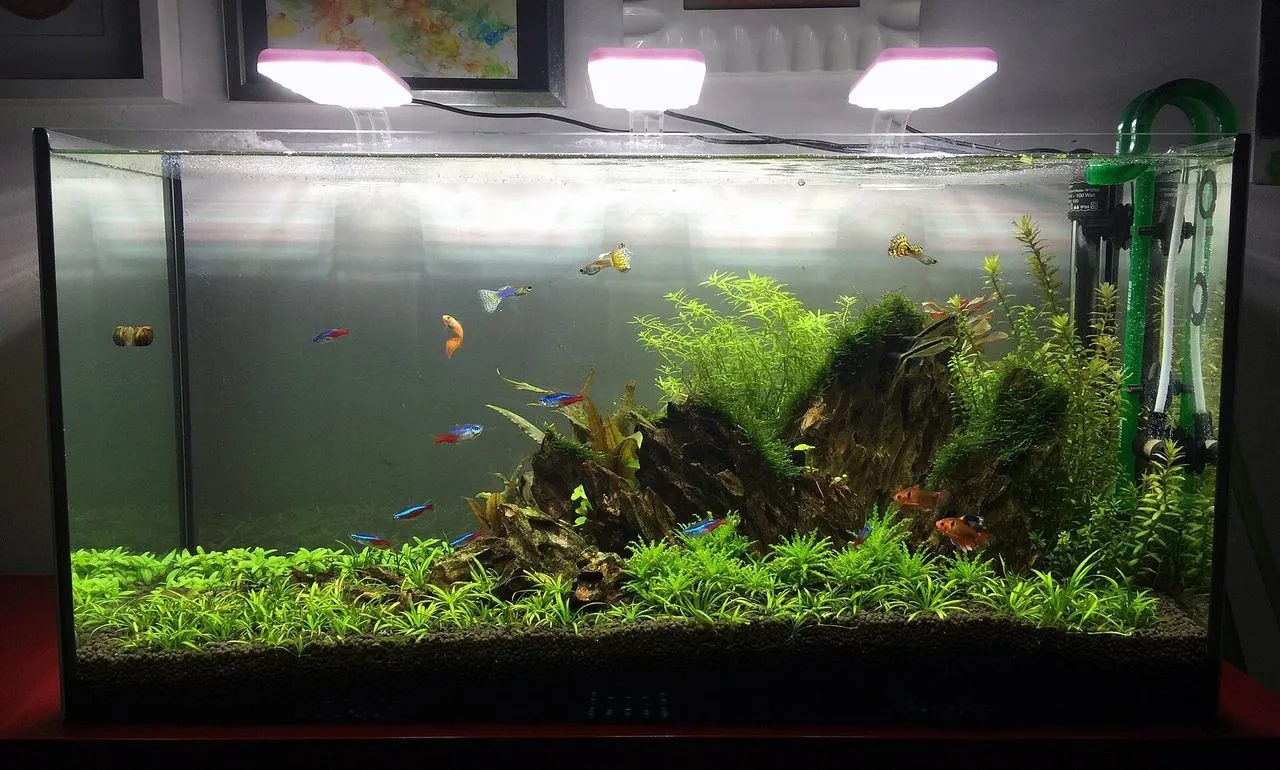
Answer: The most common reason a cycle stalls is pH or KH exhaustion. Nitrifying bacteria stop functioning below pH 6.5, and the cycling process itself acidifies the water, exhausting KH in soft or unbuffered tanks within days. Other frequent causes are temperature below 20 °C, ammonia dosed above 5 ppm, chlorine or chloramine in top-up water, a UV steriliser running during the cycle, and expired test kits returning false zero readings.
A stuck aquarium cycle almost always traces to a single underlying chemistry block. The diagnostic key is which nitrogen step has stalled — whether ammonia is present but nothing is converting it, whether nitrite is accumulating with no progression to nitrate, or whether every reading sits at zero because cycling has not yet begun. Each pattern points to a different cause and a different fix.
Part of the Complete Aquarium Care Guide.
Main Causes
The causes divide into chemistry problems, setup errors, and equipment interference.
| Cause | Step affected | Diagnostic clue |
|---|---|---|
| pH below 6.5 / KH exhaustion | Both steps, progressively | Ammonia or nitrite plateaus; pH dropped below 6.5 |
| Temperature below 20 °C | Both steps slow dramatically | Cycle started but weeks pass with no completion |
| Ammonia above 5 ppm | Nitrosomonas inhibited | Ammonia elevated; no nitrite ever appears |
| No ammonia source added | Cycle never starts | All readings at zero indefinitely |
| Chlorine or chloramine in top-up water | Nitrifiers killed on contact | Cycle resets or regresses after water changes |
| UV steriliser running | Free-swimming nitrifiers killed | No progression despite correct chemistry |
| Antibacterial medication in tank | Biofilm destroyed | Cycle collapses after treatment course |
| Filter or substrate rinsed in tap water | Media sterilised | Cycle appears to restart from zero after maintenance |
| Activated carbon installed | Ammonia adsorbed before bacteria can use it | All readings near zero; carbon recently changed |
| Copper in source water | Toxic to nitrifiers at trace concentrations | No progression; water from new copper pipework |
| Expired or incorrect test kit | False zero readings | Readings implausibly flat despite known dosing |
pH and KH exhaustion is the most commonly missed cause because it develops silently. Nitrifying bacteria operate well between pH 7.0 and 8.0. Below pH 6.8 they slow noticeably; below pH 6.0 they essentially stop. The problem is that nitrification itself produces nitric acid, which consumes KH and drives pH downward. In soft or unbuffered tap water — KH below 3 °dH — a cycling tank can exhaust its entire alkalinity reserve within the first fortnight and stall completely, with the keeper none the wiser. See Water Hardness GH and KH Explained and pH and Buffering for how to measure and maintain both.
How to Identify the Problem
Test ammonia, nitrite, nitrate, KH, pH, and temperature before changing anything. The nitrogen readings together show exactly where the blockage sits.
| Reading pattern | Interpretation | Most likely cause |
|---|---|---|
| Ammonia elevated, nitrite at zero | Nitrosomonas not established | Sterile setup, no ammonia source, pH or temperature out of range |
| Ammonia present, nitrite stuck high, nitrate absent | Nitrospira not established | pH or temperature too low; insufficient aeration |
| All three at zero, tank newly set up | Cycle has not started | No ammonia source; activated carbon removing it; no seed |
| Ammonia and nitrite both zero after weeks of dosing | Likely cycled | Confirm: dose 2 to 3 ppm ammonia, verify it drops to zero within 24 hours |
Beyond the nitrogen readings: if KH is below 3 °dH or pH has fallen below 6.5, buffer and allow chemistry to stabilise before re-evaluating progress. If temperature is below 20 °C, raise it to 24 to 26 °C and expect progress to resume over one to two weeks.
Liquid reagent test kits are essential. Test strips return unreliable readings for nitrite in particular, especially once the reagent pad has aged or been stored in a warm bathroom. If your readings look implausibly flat, dose a known quantity of ammonia directly and re-test within ten minutes. If the kit cannot detect what you just added, replace it before doing anything else.
Risk and Severity
A stalled fishless cycle is frustrating but carries no immediate animal welfare risk. A stalled fish-in cycle is a different matter entirely. Ammonia damages gill epithelium directly; nitrite interferes with haemoglobin's ability to carry oxygen. Both effects are cumulative — fish that survive an acute spike are physically compromised, and many die weeks later from secondary infections with no apparent connection to the original water quality event.
Species with the least tolerance include cherry shrimp, dwarf Caridina variants, and small soft-water tetras. Shrimp in particular should never be introduced before a cycle is complete; they die from ammonia exposure long before any visible distress is apparent. The bacterial bloom that sometimes accompanies a stalling cycle can make things look like progress — see Why Is My Aquarium Water Cloudy? for why that white-grey haze is unrelated to nitrification.
If fish are already in a stalled tank, treat it as a water quality emergency. Test every 24 hours, perform partial water changes when ammonia or nitrite climbs above 0.5 ppm, and address the root cause within 48 hours.
Solutions and Actions
1. Test and correct KH and pH first.
If KH is below 3 °dH, add a KH buffer in small increments — sodium bicarbonate is adequate. Target 4 to 6 °dH during cycling. Allow pH to recover to above 7.0 naturally before adding more ammonia. Direct pH-raising products raise the number without providing the buffering capacity that protects it from crashing again. See pH and Buffering for the full explanation.
2. Raise the temperature.
Nitrifiers colonise slowly below 20 °C and nearly stop below 15 °C. Set the heater to 25 to 26 °C and verify temperature at the substrate, not next to the heater element. Progress should resume within a week once temperature is corrected.
3. Add biological seed.
Established filter sponge, ceramic media rings, or gravel from a healthy, disease-free mature tank carries proven live colonies far more reliably than most commercial products (Hovanec & DeLong, 1996). Even a small quantity of aged media accelerates colonisation significantly. For the full fishless cycling procedure and how to use seed effectively, see Cycling a New Aquarium — this article does not duplicate that protocol.
4. Correct the ammonia source.
Ammonia above 5 ppm actively suppresses nitrifiers. Keep dosing to 1 to 4 ppm and re-dose only when readings approach zero. If activated carbon is installed, remove it — carbon adsorbs ammonia and starves the bacteria. If the ammonia source is fish food rather than measured pure ammonia, dosing is unpredictable; switch to a pure-ammonia source for reliable progress.
5. Eliminate chlorine and chloramine.
Use a dechlorinator that explicitly states it neutralises chloramine, not just chlorine. Most UK tap water now contains chloramine, which does not off-gas and remains lethal to nitrifiers at normal tap concentrations. Dose the full declared tank volume on every water addition, including small top-ups.
6. Turn off the UV steriliser.
A UV steriliser irradiates free-swimming bacteria before they can reach and colonise filter media. Turn it off for the entire cycle. Restart once ammonia and nitrite have both read zero on two consecutive days.
7. Verify the test kit.
Dose 2 to 3 ppm of ammonia directly into the tank and re-test within ten minutes. If the kit reads zero, replace it. Liquid reagent kits degrade when stored in heat or direct light; replacement costs less than a prolonged, misdirected stall.
Prevention
Most stalled cycles are preventable before any ammonia is dosed.
Start with seeded media whenever possible. A sponge run in an established healthy tank shortens a cycle from weeks to days and sidesteps most of the chemistry problems that affect from-scratch colonisation. Test KH and pH before adding ammonia — if your tap water has KH below 3 °dH, buffer it first. Set the thermostat to 25 °C before beginning. Remove activated carbon and switch off the UV steriliser before the first ammonia dose.
Use a liquid test kit from the start. Nitrogen Cycle Explained covers what each reading means and why the sequence matters. A cycle monitored with strips frequently appears to complete while ammonia is still measurable on a liquid kit.
Common Mistakes
- Dosing too much ammonia to speed things up. Above 5 ppm it inhibits the very organisms you are trying to grow. More ammonia is not faster.
- Large, frequent water changes during a fishless cycle. Every large change removes the ammonia that nitrifiers are feeding on. Change water only when ammonia climbs above 4 to 5 ppm, and only enough to bring it back to 2 to 3 ppm.
- Rinsing filter media under the tap. Chlorinated tap water sterilises biological media in minutes. Always rinse in removed tank water or freshly dechlorinated water.
- Treating a stall as a waiting problem. A cycle that has not moved in two weeks is almost always blocked by chemistry or equipment. Testing KH, pH, and temperature and checking the cause list above will locate it. Waiting without diagnosing changes nothing.
- Confusing a bacterial bloom with cycling progress. The white-grey haze that appears in many new tanks is heterotrophic bacteria feeding on dissolved organics — unrelated to nitrification. Ammonia can remain dangerously elevated throughout a bloom. Verify progress with a test kit, not visual cues.
FAQ
The cycle was progressing, then stalled suddenly. What happened?
Almost certainly KH exhaustion. As nitrification produces nitric acid, alkalinity is consumed. When KH reaches zero, pH drops rapidly and nitrifiers shut down. Test KH and pH immediately. If KH is zero and pH is below 6.5, buffer the water in small increments, allow pH to recover naturally above 7.0, and the cycle should resume within a few days.
Can I cycle a tank faster than 3 to 6 weeks?
Yes, with biological seed from a healthy tank. Established filter sponge combined with correct temperature (25 to 26 °C), KH above 3 °dH, and ammonia held at 1 to 4 ppm can produce a complete cycle in under ten days. The full procedure is in Cycling a New Aquarium.
Should I do water changes during a fishless cycle?
Only when ammonia climbs above 4 to 5 ppm — and only enough to bring it back to 2 to 3 ppm, not a full water change. Frequent large changes remove the bacteria's food source and extend the cycle significantly. The goal is a steady 1 to 4 ppm, not the lowest reading possible.
My test reads zero for everything. Is the tank cycled?
Not necessarily. Zero readings before any ammonia has been added means cycling has not started. Verify the kit by dosing 2 to 3 ppm and re-testing immediately. If readings are genuinely zero after weeks of active dosing, confirm the cycle is complete by dosing 2 to 3 ppm and checking that it drops back to zero within 24 hours before adding any livestock.
Frequently Asked Questions
How long should a fishless cycle take?
Three to six weeks is normal at 25 °C with no biological seed and correct chemistry. With a generous portion of established filter sponge from a healthy mature tank, a correctly set-up cycle can complete in under ten days. If you are at week seven or beyond with no progress, something is actively blocking colonisation — most likely pH collapse from KH exhaustion or a chemical interference.
Can I speed up the cycle by adding more ammonia?
No. Ammonia above 5 ppm inhibits nitrifiers rather than feeding them. Keep the dose at 1 to 4 ppm and re-dose only once readings drop to near zero. Higher ammonia in a stalled cycle makes the problem worse, not better.
Why did my cycle crash after it seemed to be working?
A mid-cycle crash almost always means KH has been exhausted by the nitrification process itself. As bacteria convert ammonia to nitric acid, alkalinity is consumed. Once KH reaches zero, pH drops rapidly and bacteria stop functioning. Test KH and pH immediately. If KH is zero, buffer the water in small increments and allow pH to recover naturally above 7.0 before re-dosing ammonia.
Do bottled bacteria products work?
Some do, some do not. Research by Hovanec and DeLong (1996) found that many commercial products contain species that do not establish reliably in freshwater aquaria. Treat bottled bacteria as a supplement to correct chemistry and temperature, not a substitute for them. Verify all progress with test readings regardless of what the label claims.
Sources & References
- Hovanec, T.A. & DeLong, E.F. (1996). Comparative analysis of nitrifying bacteria associated with freshwater and marine aquaria. Applied and Environmental Microbiology, 62(8): 2888–2896.
- Walstad, D. (2013). Ecology of the Planted Aquarium. Echinodorus Publishing.
- Stoskopf, M.K. (1993). Fish Medicine. W.B. Saunders.
- Noga, E.J. (2010). Fish Disease: Diagnosis and Treatment. Wiley-Blackwell.