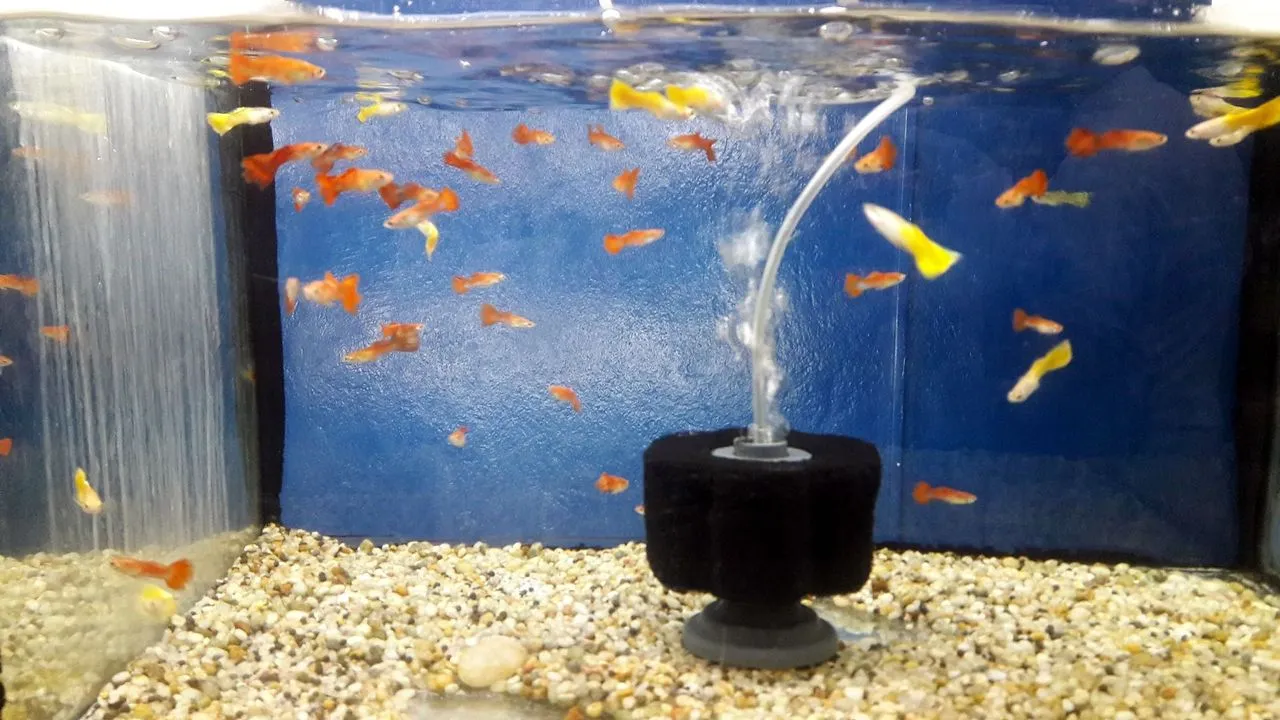
Answer: Fish jump for two distinct reasons: some species breach the surface naturally as part of feeding, spawning, or migration instinct, while others jump to escape toxic water, low oxygen, aggression, or a pH crash. Hatchetfish, climbing perch, weather loaches, and killifish are natural jumpers that need a lid regardless of water quality. Any other species jumping is a water emergency: test ammonia and nitrite immediately.
Fish jumping out of the tank is one of those moments that looks like a freak accident but almost always has a clear cause. Either the species is wired to breach the surface, as with surface-feeding characins, air-breathing anabantoids, and seasonally migrating loaches, or the tank has become uninhabitable and the fish is attempting to escape. Those two categories demand different responses, but both start with the same immediate action: secure the lid.
Part of the Complete Aquarium Care Guide.
Main Causes
| Cause | Mechanism | Tell-tale signs |
|---|---|---|
| Ammonia or nitrite spike | Gill damage makes breathing painful; fish attempts to escape the water | Multiple species jumping or gasping; recent new setup, overfeeding, or filter failure |
| Low dissolved oxygen | Insufficient O₂ at the gill surface; same physiological drive as surface gasping | Still water, high temperature, heavy stocking |
| pH crash or temperature spike | Acute chemical shock triggers a flight response | Readings outside normal range; recent large water change with mismatched water |
| Aggression and chasing | Harassed fish driven into a corner launches upward | One fish consistently hiding in corners; missing scales, torn fins, visible pursuits |
| Spawning behaviour | Gouramis, killifish, and some livebearers jump or breach during reproductive activity | Tied to male-female interaction; no laboured breathing; seasonal pattern |
| Startle response | Sudden noise, vibration, or lighting change causes a single panicked leap | One-off event; no recurrence; no water-quality signal |
| Species-natural behaviour | Evolutionary jumpers breach the surface regardless of water quality | Hatchetfish, climbing perch, weather loaches, killifish, African butterfly fish |
How to Identify the Problem
Start with the species. A marble hatchetfish (Carnegiella strigata) clearing the waterline at feeding time is normal surface-feeding behaviour. A dwarf gourami launching itself at midnight is not. Ask three questions before reaching for the test kit.
Which fish jumped? Natural jumpers, including hatchetfish, climbing perch, killifish, weather loaches, and many rainbowfish, need a close-fitting lid as a baseline requirement, independent of water quality. If a non-jumping species left the tank, treat it as a water-quality emergency until testing proves otherwise.
Did multiple fish jump, or just one? A single fish jumping once suggests a startle or an aggression event. Multiple fish jumping, or the same fish jumping repeatedly, points toward water chemistry or dissolved oxygen.
What happened in the last 48 hours? A water change with mismatched temperature, a new fish addition, a power cut that stopped the filter, or an episode of overfeeding can each create the conditions for an escape attempt. If new livestock preceded the jumping, read Acclimating New Fish before drawing conclusions about the tank's baseline health.
Test ammonia, nitrite, and pH as soon as any non-natural jumper leaves the tank. If either toxin reads above 0 ppm, the gill mechanism driving jumping and gasping is identical -- the protocol in Why Are My Fish Gasping at the Surface? applies directly.
Risk and Severity
A fish that lands outside the tank has minutes, sometimes less. Tetras, rasboras, and most small community fish desiccate rapidly; even a humid floor extends survival only slightly. Siamese fighting fish and other anabantoids fare a little longer because their labyrinth organ allows them to extract atmospheric oxygen, but they still desiccate quickly and sustain muscle damage from dry contact.
Two species genuinely migrate overland in the wild. Climbing perch (Anabas testudineus) traverse short distances between pools using their gill covers and pectoral fins. Weather loaches (Misgurnus anguillicaudatus) leave ponds during rain to disperse across flooded ground. Both survive longer out of water than most aquarium fish, but neither benefits from the experience in captivity.
Ammonia poisoning that triggered the escape attempt leaves gill epithelium damaged even after the fish is returned to the tank. A fish that appears recovered may develop secondary bacterial infection silently over the following days. Monitor closely and, if fin damage or surface lesions appear, consult Bacterial vs Fungal Disease to distinguish the presentation.
Solutions and Actions
Do these in order, immediately.
- Recover the fish. Wet your hands, cup the fish gently, and return it to the tank without delay. Do not place it in a dry container. If it is still, hold it gently near the filter outlet until gill movement resumes.
- Secure the lid. Cover every gap: filter cutouts, heater cable exits, airline tubing holes. Plastic mesh or cut acrylic sheet blocks awkward openings. The gap between waterline and lid should be under 1 cm for any confirmed jumping species.
- Test ammonia, nitrite, and pH within five minutes. If either toxin is detectable, perform a 30 to 50% water change with temperature-matched, dechlorinated water immediately. Read Nitrogen Cycle Explained if the tank is new or the filter was recently disturbed.
- Check temperature. Above 28 °C, dissolved oxygen falls sharply while fish metabolism accelerates. Float a sealed bag of cooler water in the tank to reduce temperature gradually, no faster than 1 °C per hour.
- Observe the fish after return. Normal position and resumed feeding within an hour suggests a startle event. Gasping, listing, or clamped fins indicate a water-quality problem that has not been resolved.
- Address aggression. A dominant male, a territorial betta, or a persistently chasing cichlid will produce repeat jumping incidents regardless of water quality. Restructure the tank with sight breaks, or separate the aggressor.
Prevention
Fit a lid with no meaningful gaps. This single measure prevents most jumping deaths. Foam weatherstrip seals perimeter gaps around filter pipes and cables. For confirmed jumping species, the waterline-to-lid distance should be under 1 cm.
Know your species before buying. Marble hatchetfish (C. strigata), African butterfly fish (Pantodon buchholzi), killifish, and weather loaches will breach the surface in pristine water. Research the escape tendency of any fish before placing it in an open-topped or loosely covered tank.
Maintain stable water chemistry. A pH crash is one of the fastest triggers for mass jumping. Keeping KH above 3 °dH provides buffering against acidification. For the full picture on carbonate hardness and its role in pH stability, read pH and Buffering.
Manage aggression before it escalates. Provide tall plants, floating cover, and hardscape that break sightlines so subordinate fish are not constantly visible to the dominant animal. Species that chase females relentlessly need either a heavily planted tank or a single-specimen setup.
Never leave the lid off after maintenance. Most incidental jumping deaths happen during or immediately after water changes when the lid is set aside. Replace it before restarting equipment or leaving the room.
Quarantine new additions with a secure lid. A disoriented or stressed fish is far more likely to jump in the first 24 hours in a new environment. A covered quarantine tank with low ambient light during the settling period removes much of that risk.
Common Mistakes
- Assuming it was a one-off. A fish that jumped once will jump again if the underlying cause is not found and removed. The event is a data point, not a resolved incident.
- Returning the fish without testing the water. The jump was a symptom. Returning the fish to identical conditions accomplishes nothing and the fish may exit again within hours.
- Ignoring gaps around cables. Fish are considerably more flexible than they look and will exit through the narrowest available opening. Cable entry points are the most common escape route on tanks that nominally have lids.
- Treating natural jumpers as distressed fish. Hatchetfish breaching at feeding time is not a water-quality alarm. Reacting with unnecessary water changes can destabilise chemistry and stress fish that were never at risk.
- Overstocking after losses. Adding fish to replace ones that jumped increases bioload, lowers dissolved oxygen, and raises the probability of further jumping from the surviving stock.
FAQ
How long does a fish survive out of the tank?
Most community fish, including tetras, rasboras, and danios, survive only minutes on a dry surface. Bettas and other anabantoids may last 30 to 60 minutes in humid conditions because their labyrinth organ allows atmospheric breathing. Speed of return is the single most important factor in survival; every minute on a dry surface increases the likelihood of permanent gill and tissue damage.
My fish only jumps at night. What does that mean?
Nocturnal jumping usually points to one of three things: dissolved oxygen dropping as temperature falls overnight and surface agitation slows; a nocturnal fish chasing tankmates in the dark; or spawning activity from species that breed at dusk, including many killifish and some gouramis. Test oxygen and pH first, then observe the tank with a dim red light rather than the main display light.
Can a fish that jumped recover fully?
Often yes, if returned quickly and if water quality is good. Fish found within a few minutes and returned to clean, well-oxygenated water frequently resume normal behaviour within hours. Fish that spent longer out of water, or that were returned to the same conditions that drove them out, fare considerably worse and are prone to secondary infection in the days that follow.
Do floating plants prevent jumping?
Partly. Dense floating cover such as salvinia, frogbit, or water lettuce reduces the clear water surface that surface-feeding jumpers target and provides visual refuge for harassed fish. It is not a substitute for a lid. A panicked fish will clear a floating plant layer without slowing down.
Frequently Asked Questions
How long does a fish survive out of the tank?
Most community fish survive only minutes on a dry surface. Bettas and other anabantoids may last 30 to 60 minutes in humid conditions because their labyrinth organ lets them breathe atmospheric oxygen. Return the fish immediately and prioritise clean, well-oxygenated water on its return.
My fish only jumps at night. What does that mean?
Nocturnal jumping usually points to one of three things: a drop in dissolved oxygen as overnight temperatures fall and surface agitation reduces; a nocturnal fish chasing tankmates in the dark; or spawning activity from killifish or gouramis that breed at dusk. Test oxygen and pH first, then observe with a dim red light.
Can a fish that jumped recover fully?
Often yes, if returned promptly and if water quality is good. Fish found immediately and returned to clean, well-oxygenated water frequently resume normal behaviour within hours. Fish that spent longer out, or that were returned to the same toxic conditions that drove them out, fare considerably worse.
Do floating plants prevent jumping?
Partly. Dense floating cover such as salvinia or frogbit reduces the open water surface that surface-feeding jumpers target and gives harassed fish visual refuge. It is not a substitute for a lid. A panicked or determined fish will clear a floating plant layer without slowing down.
Sources & References
- Sterba, G. (1983). Freshwater Fishes of the World. Studio Vista.
- Noga, E.J. (2010). Fish Disease: Diagnosis and Treatment. Wiley-Blackwell.
- Froese, R. & Pauly, D. (eds). FishBase. www.fishbase.org. Accessed 2026.
- Stoskopf, M.K. (1993). Fish Medicine. W.B. Saunders.